What is a ceramic heater and how does it work?
A ceramic heater turns electricity into heat through ceramic elements. In a PTC element, electrical resistance increases as the material warms, helping to limit its temperature. A fan can then carry that heat into the room; ceramic describes the element, not whether a heater has a fan.
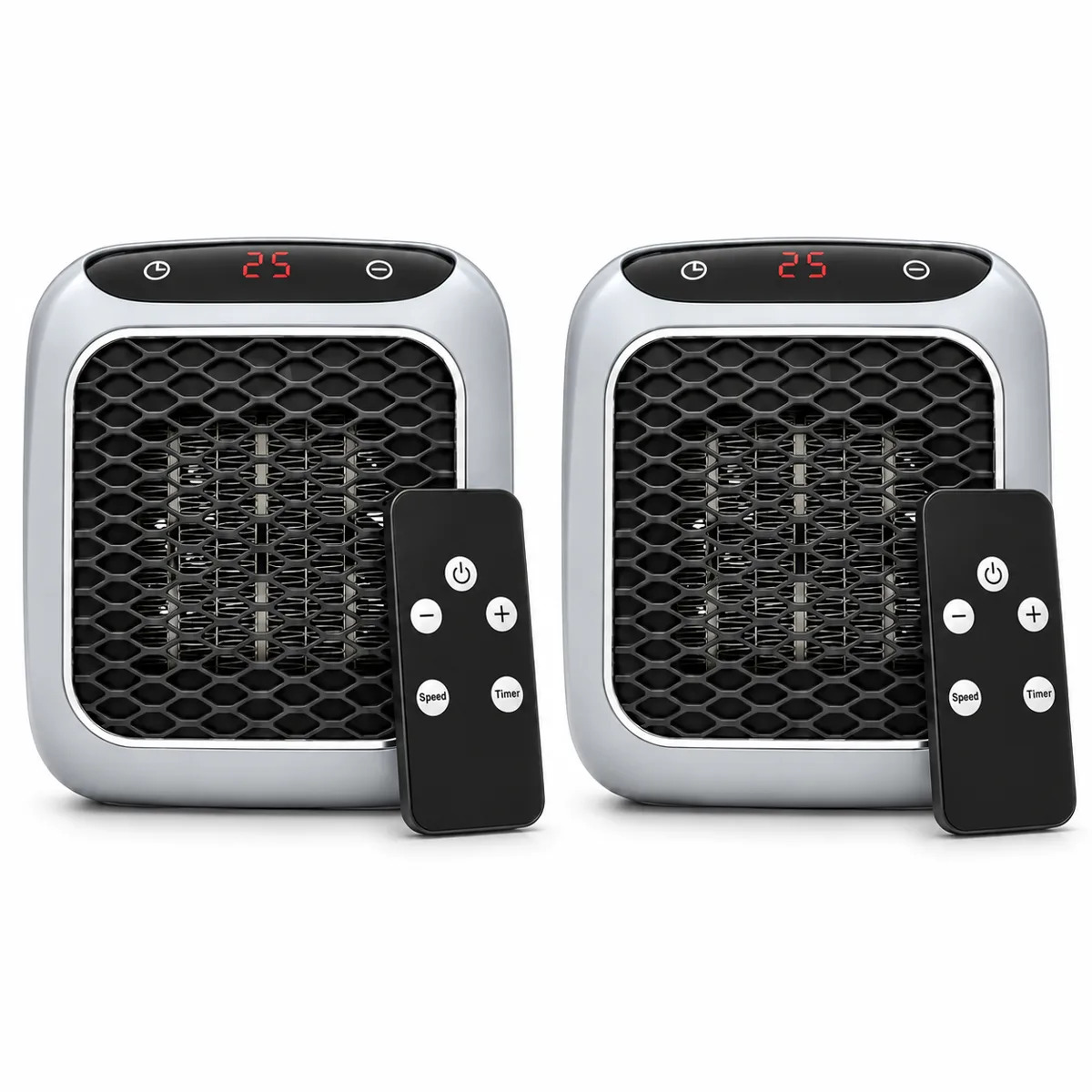
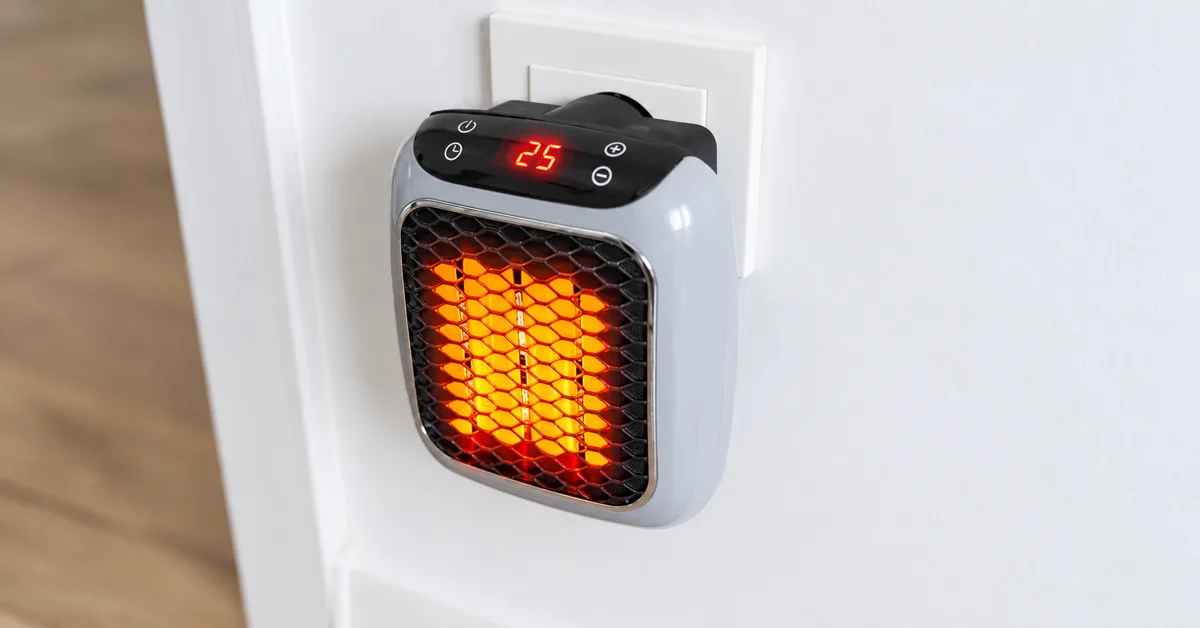
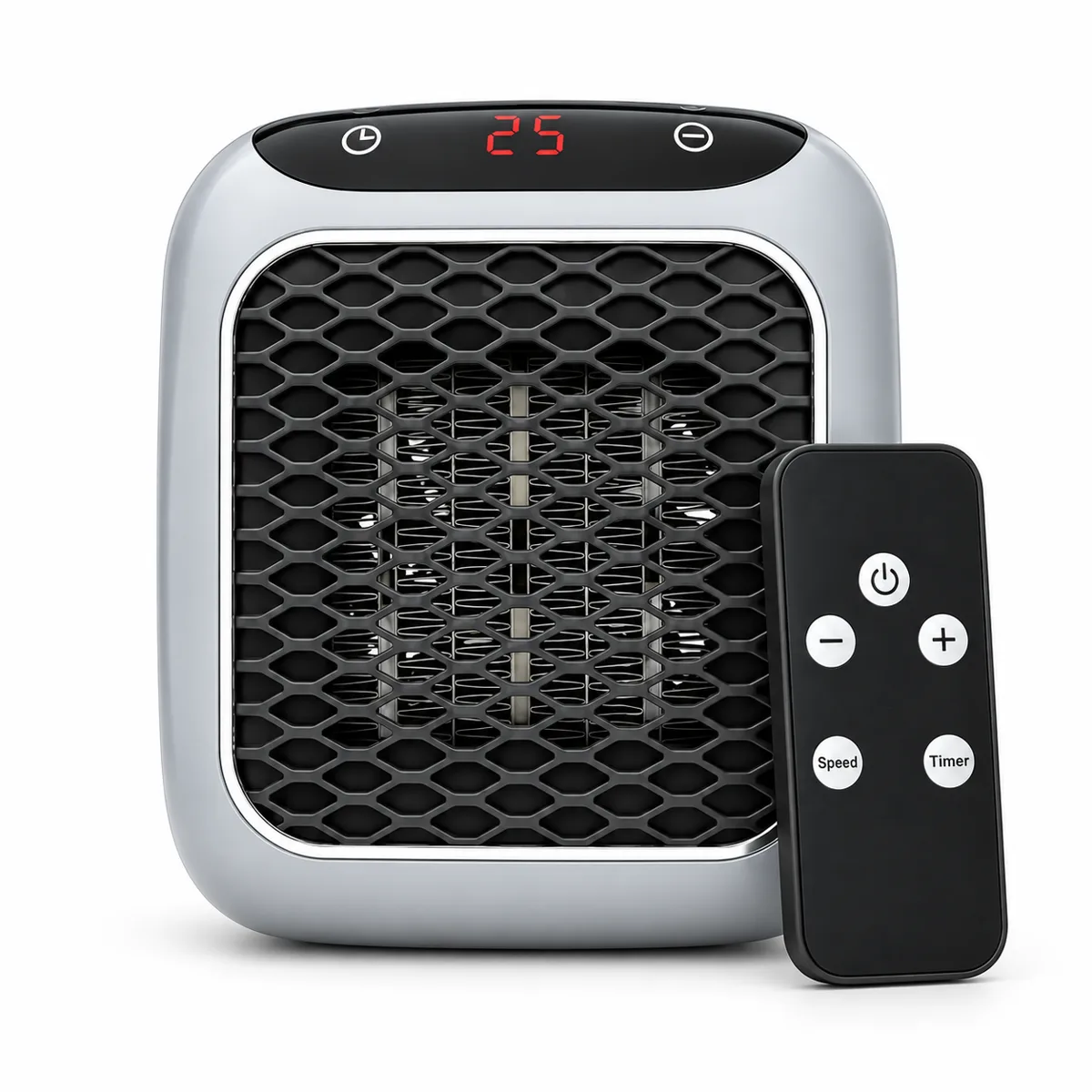
RapidHeat combines PTC ceramic plates with a quiet fan in a wall-socket unit. Its adjustable thermostat, LED display, programmable timer and remote control help you manage heating sessions. Read how RapidHeat works for a closer explanation of these controls.
Are ceramic heaters more energy efficient?
Not in the sense of producing more heat from each unit of electricity. Around one kilowatt-hour of electricity becomes one kilowatt-hour of heat in any resistive electric heater. Ceramic elements do not multiply that energy or make a cold room need less heat.
Savings can come from warming an occupied small room instead of heating unused rooms, choosing lower power when sufficient and switching off promptly. A low-powered heater also supplies less heat, so compare comfort and running time rather than wattage alone. Our energy-efficient electric heater guide explains this distinction.
How much does a ceramic heater cost to run in Ireland?
| Heater type | Typical power | Cost per hour* |
|---|---|---|
| RapidHeat (low) | 400W | €0.14 |
| RapidHeat (high) | 800W | €0.28 |
| Fan heater | 2,000W | €0.70 |
| Oil-filled radiator | 1,500–2,500W | €0.53–€0.88 |
| Halogen heater | 1,200W | €0.42 |
*At full power and an electricity unit rate of €0.35/kWh, close to typical Irish standard tariffs. Thermostats cycle heaters off once a room is warm, so real costs are usually lower.
RapidHeat uses 400W on low and 800W on high. At the example rate, four hours on low costs about €0.56 a day, or roughly €17 over a 30-day month. Four hours on high would cost €1.12 a day before thermostat cycling.
Use your own electricity unit rate for a personal estimate: power in kilowatts multiplied by hours used multiplied by euro per kilowatt-hour. Standing charges are separate. A timer limits the session, while a thermostat reduces demand only when the room reaches its setting.
What size room can a ceramic heater warm?
| Space | RapidHeat suitability | What to check |
|---|---|---|
| Small enclosed study | A sensible top-up option | Close the door and keep airflow clear |
| Bedroom up to about 12 m² | Possible while you are awake | Socket must be clear of bedding |
| Large open-plan living area | Not suitable as the main heater | Choose heating sized for the heat loss |
| Poorly insulated conservatory | Not suitable on its own | Glazing can lose heat quickly |
Match the heater to the room rather than assuming every ceramic model has the same output. RapidHeat is intended for a small room up to about 12 m² and can warm such a room in under five minutes under suitable conditions. Draughts, high ceilings and cold outside walls can change the result.
What are the advantages and disadvantages of ceramic heaters?
The main benefits are compact design and responsive warm air. The limitations are just as important: a small unit cannot replace a correctly sized heating system, and a fan will be audible.
- Advantages: RapidHeat needs no floor space and offers two power settings for different heating needs.
- Advantages: the timer and thermostat make short, planned sessions easier to manage.
- Disadvantages: about 45 dB is not silent, which matters beside a bed or during a call.
- Disadvantages: a suitable clear wall socket is essential, and the 800W maximum limits the spaces it can serve.
Is a ceramic heater better than an oil-filled radiator?
A fan-assisted ceramic heater delivers moving warm air quickly, which can suit a short spell at a desk. An oil-filled radiator warms its internal oil and body before spreading heat, so it responds differently and may suit longer, quieter sessions.
Stored warmth in an oil radiator is energy you already paid for, not free heat. Compare output, thermostat behaviour and the room you actually need to warm. Our fan heater vs ceramic heater comparison also explains why these categories overlap.
Are ceramic heaters safe to use at home?
Self-limiting PTC material is not a reason to ignore fire precautions. RapidHeat has overheat protection and auto shut-off, but you must still keep curtains, clothes, bedding and furniture away from the heater and its airflow.
Plug it directly into a sound wall socket, never an extension lead, and never cover it. Do not use a damaged or loose socket; stop using the heater if the plug or socket shows overheating. Keep children and pets away and switch it off before leaving the room or going to sleep.
RapidHeat is not IP-rated, so it is not suitable for bathroom zones or wet areas. Follow the RapidHeat instructions and check the location before every session, especially when moving the heater between rooms.
How can you reduce ceramic heater running costs?
Start by reducing avoidable heat loss: close the room door, deal with draughts without blocking required ventilation, and close curtains while keeping them clear of the heater. Heat the occupied room rather than trying to warm connected hallways.
Use high power only when needed, then try low if it maintains comfort. Set a realistic temperature and a timer for the time you will actually be there. Check smart or night-rate tariffs against your own schedule rather than assuming electricity is always cheaper at night.
For longer-term improvements, SEAI offers information on home energy upgrades and available grants. Fuel Allowance may help eligible households with heating costs. Neither changes the amount of heat this appliance can deliver.
Which RapidHeat bundle suits occasional ceramic heating?
For one small room, the single heater is €59 including VAT. The two-pack is €89 and is the most popular bundle, useful if you want one unit in a study and one in a bedroom without moving them. Running two together doubles their combined consumption at the same setting.
The three-pack is €119, or €39.67 each, and the four-pack is €179. Buy only for rooms with suitable sockets and genuine use. Check RapidHeat prices and bundles before choosing; more units do not make one unit capable of heating a bigger room.
The official Irish store is rapidheatie.com, with free delivery throughout the Republic of Ireland and a 30-day money-back guarantee from delivery, alongside statutory rights. Base your decision on the specifications, room size and safe socket placement.
Who RapidHeat is not right for
We'd rather you buy the right heater than return the wrong one. RapidHeat probably isn't for you if:
- Households looking for a replacement for whole-house heating.
- People heating large open-plan rooms or poorly insulated conservatories.
- Anyone needing a heater for bathroom zones or wet areas.
- Light sleepers who require completely silent heating.
Frequently asked questions
Are ceramic heaters cheap to run?
A small ceramic heater can cost less per hour because it draws less power, not because ceramic creates extra energy. RapidHeat costs €0.14 on low or €0.28 on high per full-power hour at €0.35/kWh.
Can I leave a ceramic heater on all night?
Do not leave a portable heater running while you sleep. Warm the room while awake, use the timer and switch it off before bed.
Does a ceramic heater have a fan?
Many do, including RapidHeat. Ceramic describes the heating element, while fan describes how warm air is moved into the room.
Will a ceramic heater dry out damp walls?
It can raise air temperature, but it does not remove water from the home. Persistent damp needs attention to ventilation, leaks or insulation rather than heating alone.
Is RapidHeat silent?
No. Its fan operates at about 45 dB, so expect an audible sound even though it is described as quiet.
Can I use a ceramic heater with an extension lead?
Do not use RapidHeat with an extension lead. It must plug directly into a suitable wall socket with clear space around it.