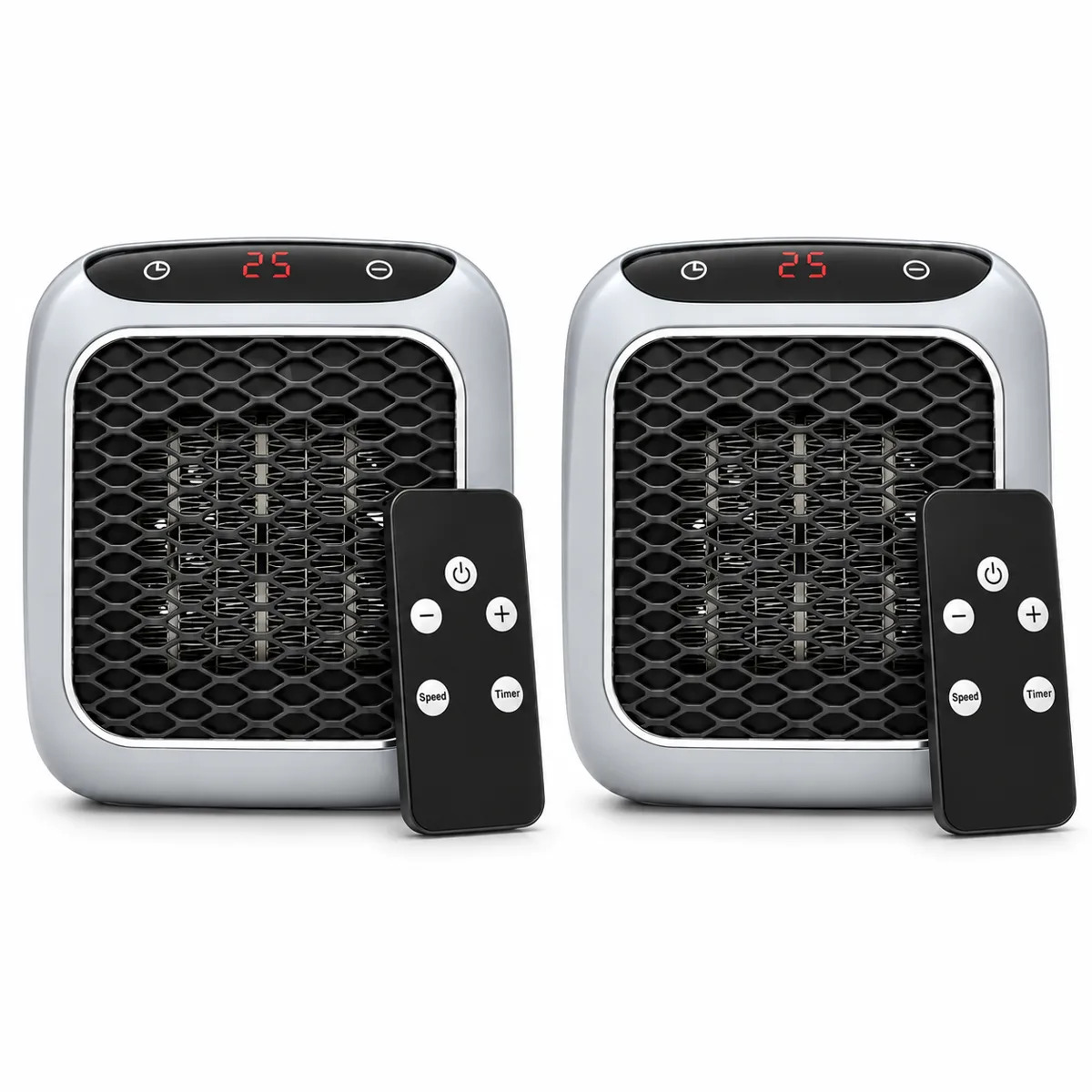
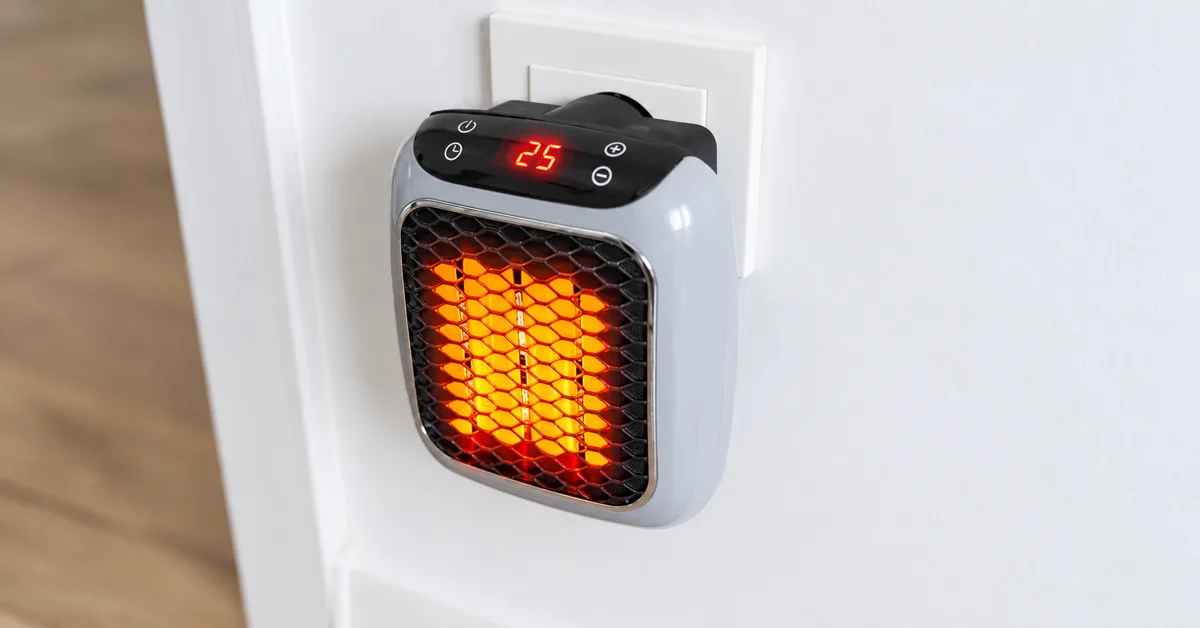
What is the difference between a fan heater and a ceramic heater?
A fan heater describes how warmth is distributed: a fan blows air across a heating element. Ceramic describes what that element is made from. Many ceramic heaters therefore belong to both categories, rather than being an entirely separate alternative.
For this comparison, conventional fan heater means a typical 2kW wire-element model, while the ceramic example is RapidHeat at 400W or 800W. Other ceramic heaters can draw 2kW too. Always read the wattage on the actual model instead of choosing by the word ceramic alone.
Our ceramic heater guide explains PTC elements, whose resistance increases as they warm. That property helps limit element temperature but does not remove the need for normal heater precautions.
How do RapidHeat and a typical fan heater compare?
| Feature | Typical wire-element fan heater | RapidHeat ceramic heater |
|---|---|---|
| Full-power input | 2,000W example | 400W low / 800W high |
| Heat distribution | Fan-assisted | Fan-assisted |
| Position | Depends on model | Directly in a wall socket |
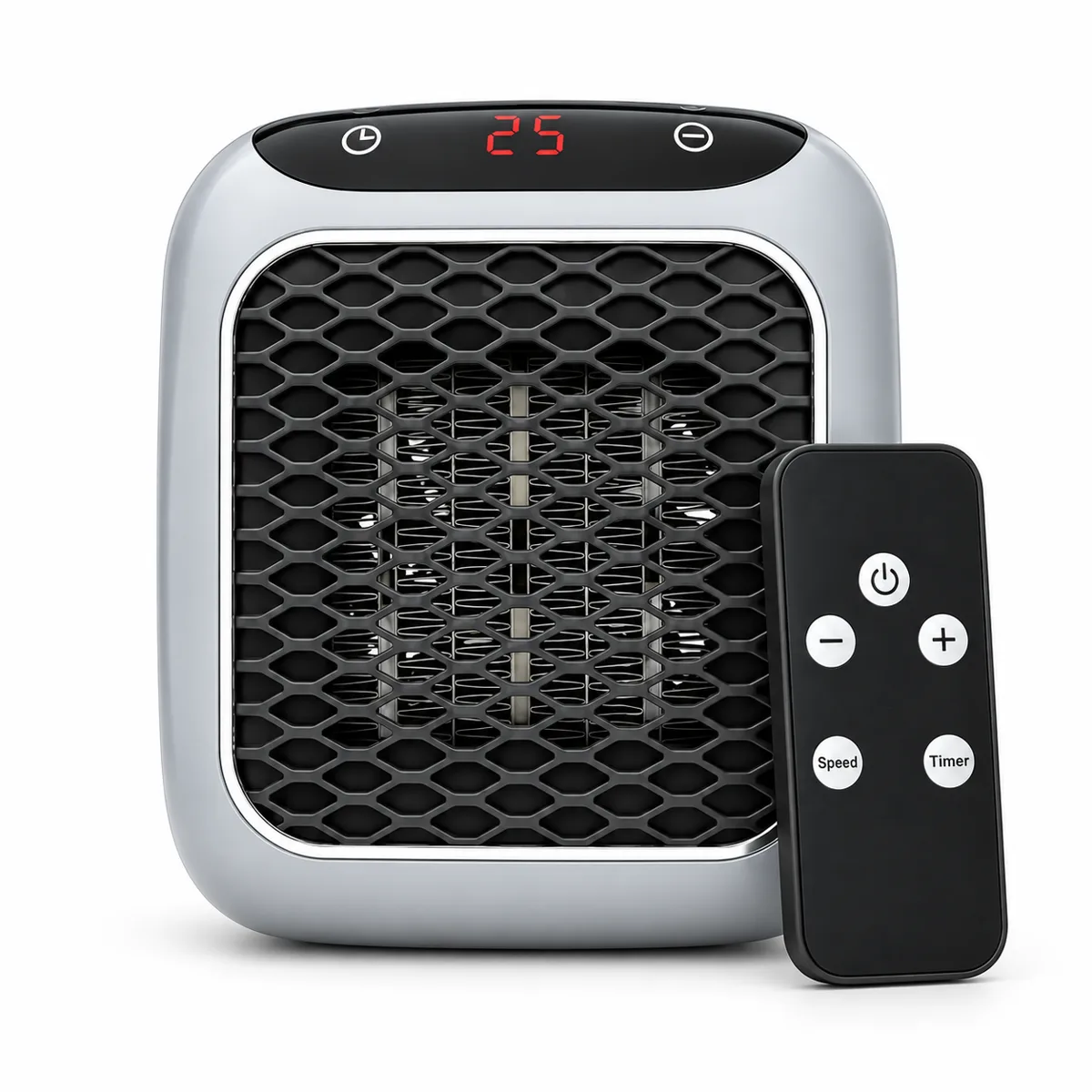
| Controls | Check the particular model | Thermostat, timer, LED display and remote |
| Noise | Varies by model | About 45 dB |
| Best use | Where greater output is needed | Small rooms up to about 12 m² |
The practical difference here is output and format, not a special conversion of electricity into extra warmth. A 2kW model supplies more heat at full power and may suit a room that a smaller unit cannot keep comfortable.
Which heater costs less to run in Ireland?
| Heater type | Typical power | Cost per hour* |
|---|---|---|
| RapidHeat (low) | 400W | €0.14 |
| RapidHeat (high) | 800W | €0.28 |
| Fan heater | 2,000W | €0.70 |
| Oil-filled radiator | 1,500–2,500W | €0.53–€0.88 |
| Halogen heater | 1,200W | €0.42 |
*At full power and an electricity unit rate of €0.35/kWh, close to typical Irish standard tariffs. Thermostats cycle heaters off once a room is warm, so real costs are usually lower.
At these rates, two hours of continuous use costs €1.40 for the 2kW example, €0.56 for RapidHeat on high or €0.28 on low. These are electricity-input comparisons, not a promise that all three options achieve the same room temperature.
A stronger heater may reach its thermostat setting sooner and cycle off. A smaller heater may keep running in a cold room without reaching the target. For a fairer comparison, look at total electricity used over a comfortable session rather than hourly price alone.
Does a ceramic heater save more electricity?
All resistive electric heaters turn around one kilowatt-hour of electricity into one kilowatt-hour of heat. The ceramic element does not have a hidden efficiency advantage over a wire element or an oil radiator at that basic task.
Savings are possible when lower output is enough, when a timer prevents wasted running, or when you heat one occupied room instead of unused parts of the home. Our energy-efficient electric heater guide separates these useful habits from claims about miracle heating technology.
Which heater is best for my room size?
| Room or situation | Starting point | Important limitation |
|---|---|---|
| Small enclosed home office | Consider RapidHeat | Keep the door shut and air path clear |
| Bedroom up to about 12 m² | Consider short ceramic heating sessions | Switch off before sleeping |
| Larger enclosed room | Assess a higher-output heater | Size the appliance to heat loss |
| Open-plan room or cold conservatory | Seek an appropriate heating solution | RapidHeat is not suitable on its own |
RapidHeat is designed to warm a small room up to about 12 m² in under five minutes under suitable conditions. Room area is only a starting point: insulation, ceiling height, outside temperature and an open door can all increase heat demand.
Which warms a room faster?
Both types can deliver warm airflow promptly. How quickly the whole room feels comfortable depends on the power supplied and the heat escaping, not just how hot the air feels beside the outlet. Higher output can matter more than the element material in a chilly room.
RapidHeat suits a quick top-up in an appropriately sized space. If a room remains cold with the door closed, turning the thermostat higher does not increase its maximum 800W output. Reconsider heat loss or heating capacity instead of expecting a different setting to overcome the mismatch.
Is a ceramic heater quieter than a fan heater?
Not automatically: both can contain fans. RapidHeat operates at about 45 dB, which is audible, and noise from other models varies. We do not have a measured like-for-like test that establishes it as quieter than every conventional fan heater.
For calls, reading or television, consider where the socket sits relative to your chair. For a bedroom, warm the room before sleep rather than leaving it running overnight. See our heater for bedroom guide for room-specific considerations.
Are ceramic heaters safer than ordinary fan heaters?
PTC elements help limit their own temperature, but neither category is safe to cover or neglect. RapidHeat includes overheat protection and auto shut-off; those features are backups, not permission to leave it running unattended.
Plug RapidHeat directly into a sound wall socket, not an extension lead. Keep it clear of curtains, bedding and clothing, and stop using it if the socket becomes loose or shows heat damage. Keep children and pets away from hot surfaces and airflow.
RapidHeat is not IP-rated and must not be used in bathroom zones or wet areas. For either heater type, read the model-specific instructions rather than assuming a safety feature or bathroom approval is standard.
When should I choose each type of heater?
Choose by room needs first. The lower hourly cost of RapidHeat is helpful only if its smaller output delivers the comfort you need. A higher-powered appliance can be the more practical choice in a room with greater heat loss.
- Choose RapidHeat for small-room top-up warmth where a clear wall socket avoids taking up floor space.
- Choose a suitable higher-output fan heater when a room needs more heat than 800W can supply.
- Consider a fan-free design if audible airflow would disturb your work or rest.
- Do not buy extra low-powered heaters as a substitute for a planned whole-house heating system.
How can I spend less whichever heater I choose?
Reduce draughts without blocking essential ventilation, close doors to unused spaces and use a timer for planned sessions. Check your own electricity tariff; a smart or night rate only helps if the cheaper periods match when you need heat.
SEAI provides information on energy upgrades and grants that may address the underlying heat loss. Fuel Allowance may help eligible households with heating expenses. For more everyday measures, read our cheapest way to heat a room guide.
If RapidHeat suits two small rooms, the €89 two-pack is the most popular bundle. A single costs €59, three cost €119 and four cost €179, including VAT. Check RapidHeat bundle prices and remember that operating two heaters at once adds their consumption together.
Who RapidHeat is not right for
We'd rather you buy the right heater than return the wrong one. RapidHeat probably isn't for you if:
- Anyone needing 2kW of heat from a single RapidHeat unit.
- Households seeking a whole-house central heating replacement.
- People who require completely silent heating.
- Rooms with wet areas or no suitable clear wall socket.
Frequently asked questions
Is a ceramic heater better than a fan heater?
Neither label alone tells you which is better: many ceramic heaters also use a fan. Compare wattage, controls, room size and noise; RapidHeat suits small-room top-up heating rather than high-output heating.
Is a ceramic heater cheaper to run?
Only if it uses less electricity over your heating session. At the same wattage and running time, ceramic and wire-element resistive heaters have broadly the same electricity cost.
Can a fan heater have a thermostat?
Yes. Controls vary by model, so compare the actual specifications rather than assuming only ceramic models offer temperature control.
Does a ceramic heater keep heating after switching off?
Some residual warmth may remain, but it does not create free heat. Do not choose a small fan-assisted heater expecting prolonged stored warmth.
Will RapidHeat heat a large living room?
It is designed for small rooms up to about 12 m², not large open-plan living areas. Heat loss may make even a smaller room unsuitable.
Can I use either heater to dry clothes?
Never drape clothes over a heater or block its airflow. Keep drying laundry well clear and follow the instructions for the specific appliance.