
What should you do before buying another heater?
Start by deciding when the room is occupied and what makes it cold. A draught around an external door, a permanently open internal door or a window that does not close properly can undermine any heater. Address straightforward problems safely, without blocking required ventilation or air vents.
Use curtains to reduce evening heat loss, but never allow them to cover a heater or its airflow. Keep the room’s heating area clear of furniture. Clothing and a throw may improve personal comfort, but they are not substitutes for adequate room temperatures for people vulnerable to cold.
If the room already has a radiator, check its schedule and controls before spending more money. An existing system used more thoughtfully may be cheaper than buying and running a second appliance. The aim is comfortable occupied space, not simply the lowest wattage on a box.
How much does a plug-in heater cost to run in Ireland?
| Heater type | Typical power | Cost per hour* |
|---|---|---|
| RapidHeat (low) | 400W | €0.14 |
| RapidHeat (high) | 800W | €0.28 |
| Fan heater | 2,000W | €0.70 |
| Oil-filled radiator | 1,500–2,500W | €0.53–€0.88 |
| Halogen heater | 1,200W | €0.42 |
*At full power and an electricity unit rate of €0.35/kWh, close to typical Irish standard tariffs. Thermostats cycle heaters off once a room is warm, so real costs are usually lower.
How do you calculate your own daily heating cost?
Multiply power in kilowatts by hours of active heating, then multiply by your electricity unit rate. RapidHeat’s low setting is 0.4kW, so four continuous hours uses 1.6kWh. At €0.35/kWh, that costs €0.56 a day, or €16.80 across 30 days.
At 800W, the same schedule uses 3.2kWh a day and costs €1.12, or €33.60 across 30 days. These examples assume continuous heating at the chosen power. Thermostat cycling may reduce consumption, while colder weather can mean longer periods with the element running.
Use the rate on your own bill rather than assuming the example is your tariff. Standing charges are normally payable whether you use this heater or not, so distinguish extra heater consumption from the total bill. If you switch tariff, compare the overall household cost, not only one attractive advertised period.
A smart meter or suitable energy records can help you compare similar days. Keep weather, room use and other appliances in mind: one lower daily total is not proof that the heater caused the entire difference.
Is electric room heating cheaper than central heating?
It depends on your system, fuel price and the amount of space being heated. Running a small electric heater in one occupied room may cost less than heating many empty rooms. But a well-controlled central-heating system may already supply that room economically, and a heat pump can deliver more heat per unit of electricity than a resistive heater.
Do not compare a boiler’s total fuel input directly with one room heater’s electrical rating. The boiler may be supplying several rooms and hot water, while system losses and controls also affect the result. Compare the extra cost of achieving the comfort you actually need.
An office used for two hours during the day is a promising situation for local heating. A family using several rooms all evening is different. If the existing heating continues unchanged, adding a plug-in heater generally adds a new electricity cost rather than delivering an automatic saving.
Our RapidHeat energy-saving guide explains how to make a fair before-and-after comparison without assuming every household benefits.
Which heater suits the size of your room?
| Room conditions | Sensible starting point | What to avoid |
|---|---|---|
| Small enclosed room up to about 12 m² | RapidHeat may suit brief local heating | Assuming area alone guarantees warmth |
| Small but draughty room | Address heat loss and assess output needs | Buying only on the lowest hourly figure |
| Large living room or open-plan area | Use heating sized for the whole space | Relying on one small plug-in heater |
| Poorly insulated conservatory | Consider insulation and an appropriate system | Expecting RapidHeat to cope on its own |
| Bathroom or wet location | Use heating approved for that environment | Using RapidHeat, which is not IP-rated |
RapidHeat is designed for a small room up to about 12 m². Floor area is a starting point, not a guarantee: high ceilings, cold external walls, draughts and large windows all increase the heat needed. A lower-powered heater that never makes the room comfortable is not good value.
Measure length multiplied by width and assess how enclosed the room is. If it opens directly into a hall or larger living space, heat can escape beyond your intended zone. Keep necessary ventilation and do not try to seal a room completely.
Are ceramic heaters more efficient than oil radiators?
For ordinary resistive electric heating, around 1kWh of electricity becomes 1kWh of heat. Ceramic plates, oil-filled radiators and conventional fan heaters differ in how they deliver that heat, not in a magical ability to create more energy. Lower wattage means lower hourly consumption and lower maximum heat output.
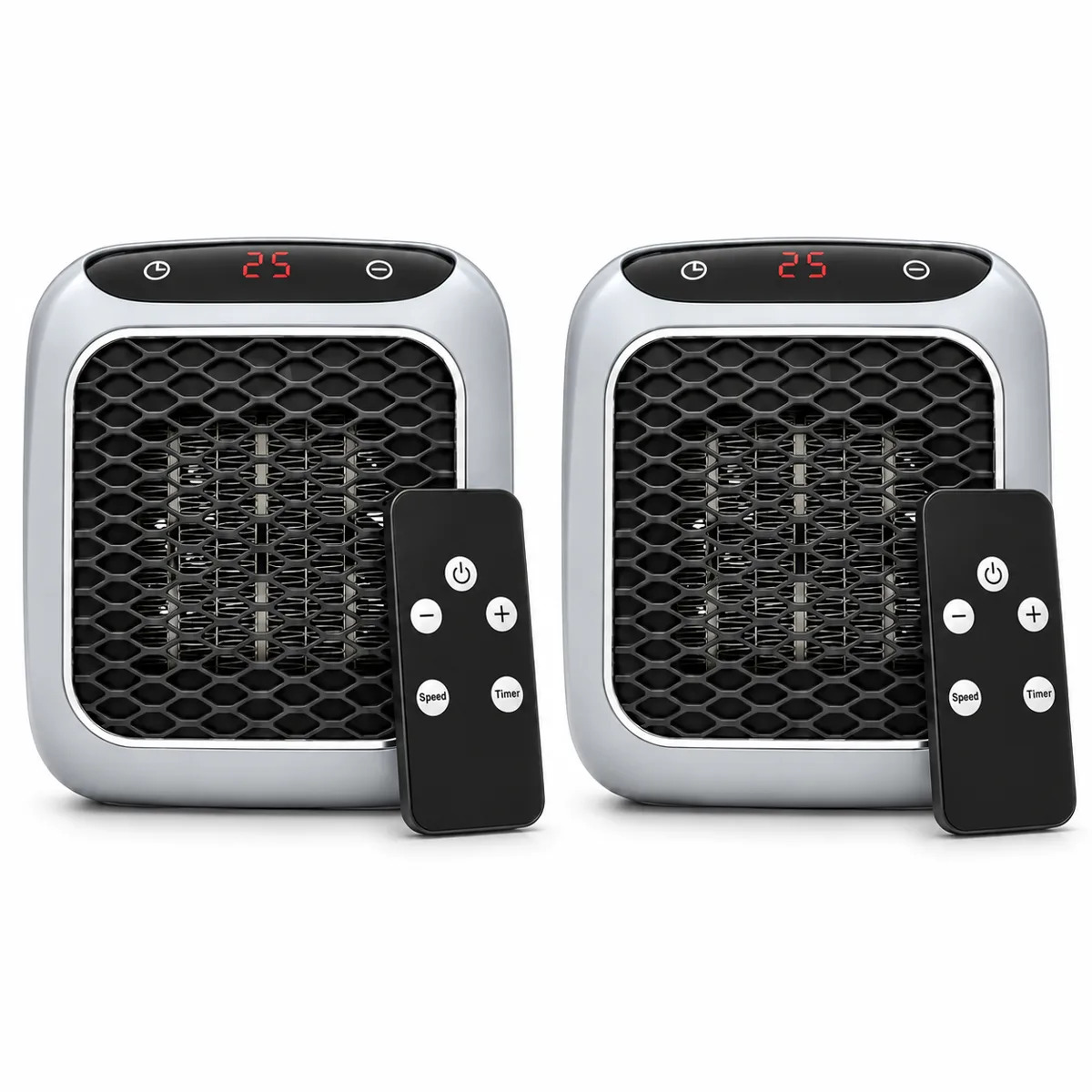
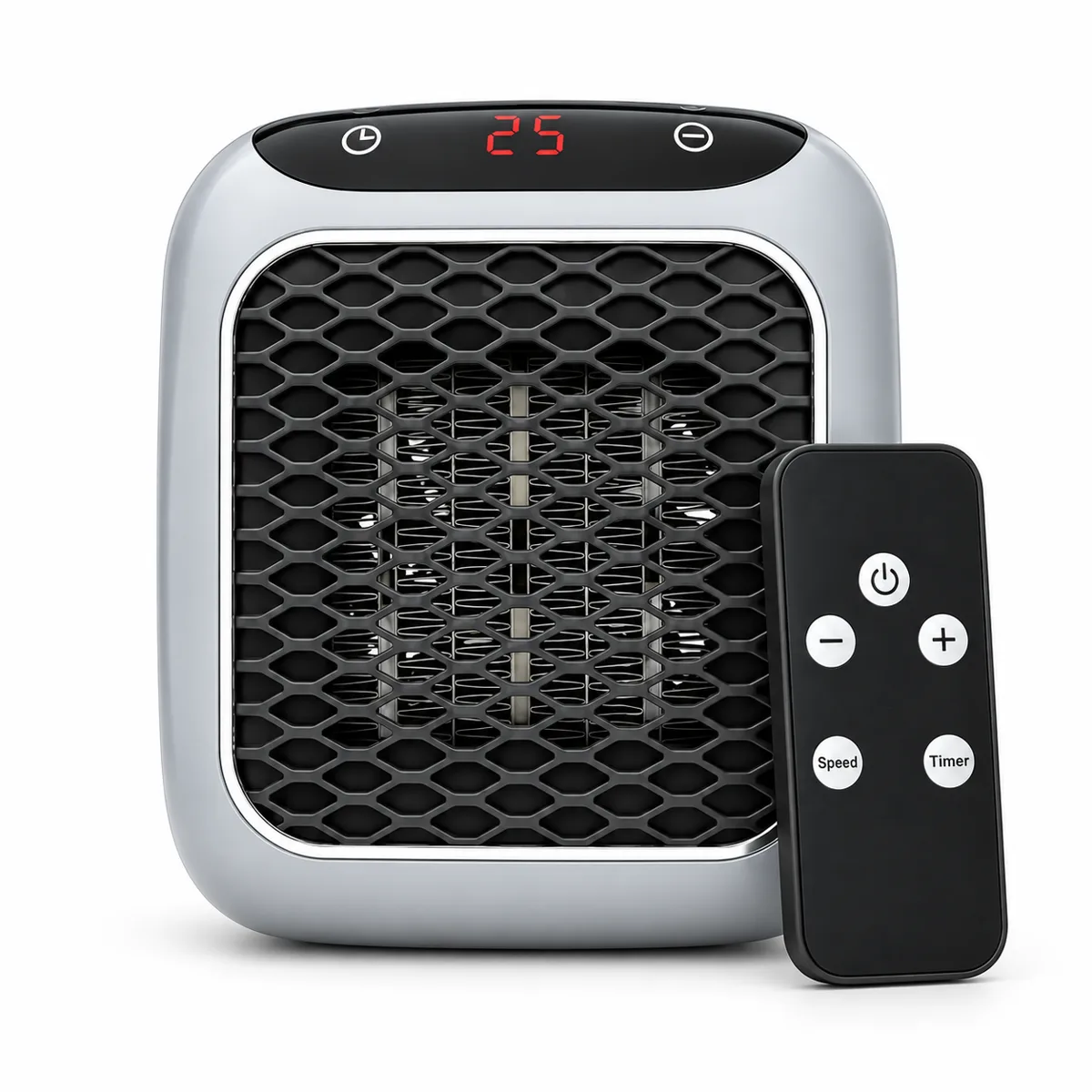
RapidHeat uses PTC ceramic plates and a fan. It offers 400W low and 800W high settings, with a thermostat to control heating as the room warms. An oil radiator stores heat in oil and releases it gradually, while a larger fan heater may provide more immediate output.
Compare controls, suitable output, noise and space as well as the price. A higher-powered heater that cycles off is not necessarily dearer overall than a lower-powered heater running continuously, if they provide comparable comfort. The RapidHeat versus oil heater comparison explores this trade-off.
Heat remaining in an oil radiator after switch-off is stored energy, not free heat. Equally, warm airflow from a ceramic heater is useful delivery, not evidence that it exceeds normal electrical heating efficiency.
How can you heat one room without wasting money?
Use a simple routine: warm the occupied room, maintain a comfortable setting and stop heating when the session ends. RapidHeat is described as warming a suitable small room in under five minutes, though insulation and starting temperature affect the outcome. Do not leave it running in an empty room simply because the hourly figure looks small.
Try high when a cold room first needs warmth, then low if it can maintain comfort. Use the thermostat rather than repeatedly setting a very high target. The programmable timer helps limit a planned session, but check that the heater is off when you leave.
If your electricity plan has cheaper periods, use them when they match genuine heating needs. An ordinary room heater is not a storage heater: preheating an empty room many hours early may lose much of the heat before you need it.
Avoid creating cold, damp conditions elsewhere by switching off essential heating indiscriminately. Households with older people, young children or health concerns should prioritise adequate warmth. SEAI has energy-saving and grant information; Fuel Allowance may help eligible households meet seasonal heating costs.
What does RapidHeat cost to buy, and is a bundle worth it?
One RapidHeat costs €59 including VAT, usually listed at €118. Two cost €89, three cost €119 and four cost €179. The 2-pack is most popular; the 3-pack is advertised as best value at €39.67 per heater, saving €235 against three units at the usual price.
For someone trying to spend as little as possible on one room, the single unit has the lowest purchase cost. A bundle only makes sense if the extra units have a real purpose. Two appliances at 400W each use 800W combined while heating, so a cheaper unit price does not reduce their combined running cost.
Allow for both the purchase and use. If you already own a safe suitable heater, replacing it with another resistive heater does not automatically repay the purchase price through improved efficiency. Better controls or more suitable output may help, but the change needs a practical reason.
Check the RapidHeat price guide and consider your likely heating hours before choosing. Estimate costs using your own tariff and heating schedule rather than assuming a typical household saving.
How can you use a low-cost heater safely?
RapidHeat plugs directly into an Irish/UK Type G wall socket. Do not use extension leads, cover the appliance or put it behind curtains or bedding. Keep the airflow clear and follow the supplied instructions for placement and operation.
Overheat protection and automatic shut-off are useful safeguards, not permission to ignore the surroundings. Stop using a damaged heater or a socket showing signs of overheating. Keep children and pets away and avoid positioning the appliance where it could be knocked or obstructed.
RapidHeat is not IP-rated and is unsuitable for bathroom zones or wet areas. Use it while awake and present, and switch it off before sleeping or leaving. A timer should back up responsible use rather than replace supervision.
If no clear wall socket is available in the room, choose a different heating arrangement. Saving a few cent is never a reason to improvise with unsuitable electrical connections or place a heater beside flammable materials.
Where can you buy RapidHeat in Ireland?
RapidHeat is sold by the official Irish store, not in Irish shops, Argos, Woodie’s or Amazon. Checkout is through Shopify. Delivery is free to every county in the Republic of Ireland, with dispatch in 1–2 working days and delivery in 2–5 working days.
Optional delivery protection costs €4.95. There is a 30-day money-back guarantee from delivery, alongside statutory rights under Irish and EU consumer law. Review delivery details and the returns policy before paying.
For questions, email support@rapidheatie.com; the stated response time is within one working day. Ask about suitability if you are unsure, and do not interpret a discount or free delivery as proof that the appliance is right for your room.
Who RapidHeat is not right for
We'd rather you buy the right heater than return the wrong one. RapidHeat probably isn't for you if:
- Households seeking a complete central-heating replacement or one heater for a whole floor.
- Large open-plan rooms and poorly insulated conservatories that need more sustained heat than a small plug-in heater can provide.
- Bathroom zones, wet areas or rooms without a suitable clear wall socket.
- Anyone expecting a ceramic heater to produce more heat per unit of electricity than other resistive electric heaters.
Frequently asked questions
What is the cheapest way to heat one room in Ireland?
Reduce avoidable heat loss and compare the cost of your existing heating with local heating for the hours you occupy the room. A small electric heater may help when it replaces heating unused space, but no single appliance is cheapest for every home.
How much does a 400W heater cost per hour?
At €0.35/kWh, a 400W heater costs €0.14 for an hour of continuous heating. Multiply 0.4 by your own unit rate to find your equivalent cost.
Is it cheaper to keep a heater on all day?
Heating an unused room all day usually increases energy use because heat continues to escape. Match the schedule to occupancy while maintaining appropriate background warmth for health, damp prevention and the property.
Can RapidHeat save 90% on my heating bill?
There is no basis for promising that saving. Any reduction depends on the heating it replaces, how much space you heat, your tariff, insulation and hours of use.
Is a 2kW heater always more expensive than an 800W heater?
It uses more electricity while heating continuously, but can provide more heat and may cycle off sooner. Compare energy used for similar comfort over the same period, not wattage alone.
Should I use a night-rate tariff for room heating?
Only if the cheaper hours match when you need warmth and the overall tariff suits your household. Running an ordinary heater unnecessarily at night is not automatically economical.
Can one RapidHeat heat a large sitting room?
Do not rely on it for that job. It is intended for small rooms up to about 12 m², and large or poorly insulated spaces can require more output.