Which type of electric heater should you choose?
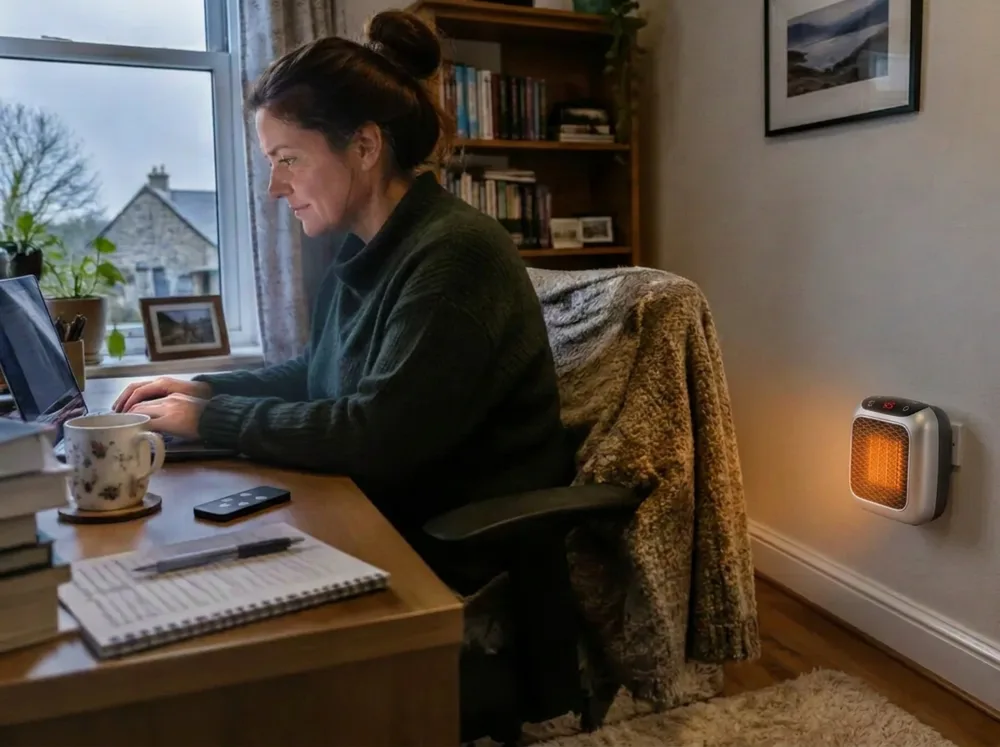
Electric heaters range from compact wall-socket models to freestanding fan heaters, oil-filled radiators and radiant heaters. Some are convenient for a short period at a desk; others are better matched to longer heating sessions. Start by deciding whether you want to warm the room evenly or feel direct warmth while sitting in one position.
For occasional small-room use, RapidHeat offers a compact option without occupying floor space. For a larger room, do not overlook the output you need simply because a smaller unit has a lower hourly running figure. Our best portable heater comparison helps put these different choices in context.
Plug-in ceramic (RapidHeat)
400W/800W, about €0.14–€0.28 an hour. Compact, no cable, thermostat and timer. Not for large rooms.
Fan heater
Around 2kW, about €0.70 an hour. Quick blast of heat, but noisy and expensive for long use.
Oil-filled radiator
1.5–2.5kW, about €0.53–€0.88 an hour. Slow to warm, holds heat well, heavy and bulky.
Halogen heater
Around 1.2kW, about €0.42 an hour. Warms what's in front of it rather than the room.
Convector / panel heater
Often around 2kW, about €0.70 an hour at full power. Wall or floor standing, slower and quieter than a fan.
How do the main electric heater types differ?
| Heater category | Reason to consider it | What to check |
|---|---|---|
| Ceramic wall-socket | Compact warmth in a small enclosed room | Clear socket and adequate output |
| Freestanding fan | Fast air movement and flexible positioning | Noise, safe clearances and wattage |
| Oil-filled radiator | Gentle warmth over longer sessions | Warm-up time, space and controls |
| Halogen | Direct warmth close to the appliance | Coverage and safe positioning |
A conventional fan heater can move warm air quickly, while an oil-filled radiator takes time to warm and then releases stored heat gradually. Halogen heaters provide direct radiant warmth rather than necessarily making every corner of the room comfortable. None of these resistive technologies creates more heat energy than the electricity supplied.
Heat pumps are different: they move heat rather than only converting electricity into heat, so they belong in a separate comparison when planning longer-term home heating. For a portable purchase, focus on controls, output, placement and comfort instead of treating every electric appliance as equivalent.
Is electric heating cheaper than central heating?
There is no universal answer because the fuel, system efficiency, tariff and number of occupied rooms change the comparison. Heating one office electrically for a short spell can avoid warming unused rooms, but that does not mean portable electricity is always the cheapest way to heat an entire house.
Look at the extra energy each choice would actually use during the period you need warmth. If your central heating already keeps the room comfortable, adding a portable heater may simply increase spending. If you are considering a broader change, the cheapest way to heat a room guide explains why room use and heat loss matter as much as appliance type.
An electric heater makes sense when…
You need one room warm for a few hours and the rest of the house can stay off, such as a home office by day or a bedroom before sleep.
Central heating is better when…
You want the whole house warm, need to manage damp, or heat large and open-plan rooms for long periods.
Where does RapidHeat fit among electric heaters?
Running cost calculator
What would RapidHeat cost you?
Setting
- Per hour
- €0.14
- Per day
- €0.56
- Per week
- €3.92
- Per month
- €16.80
Maximum cost at €0.35/kWh. The thermostat switches it off once your room is warm, so most people pay less.
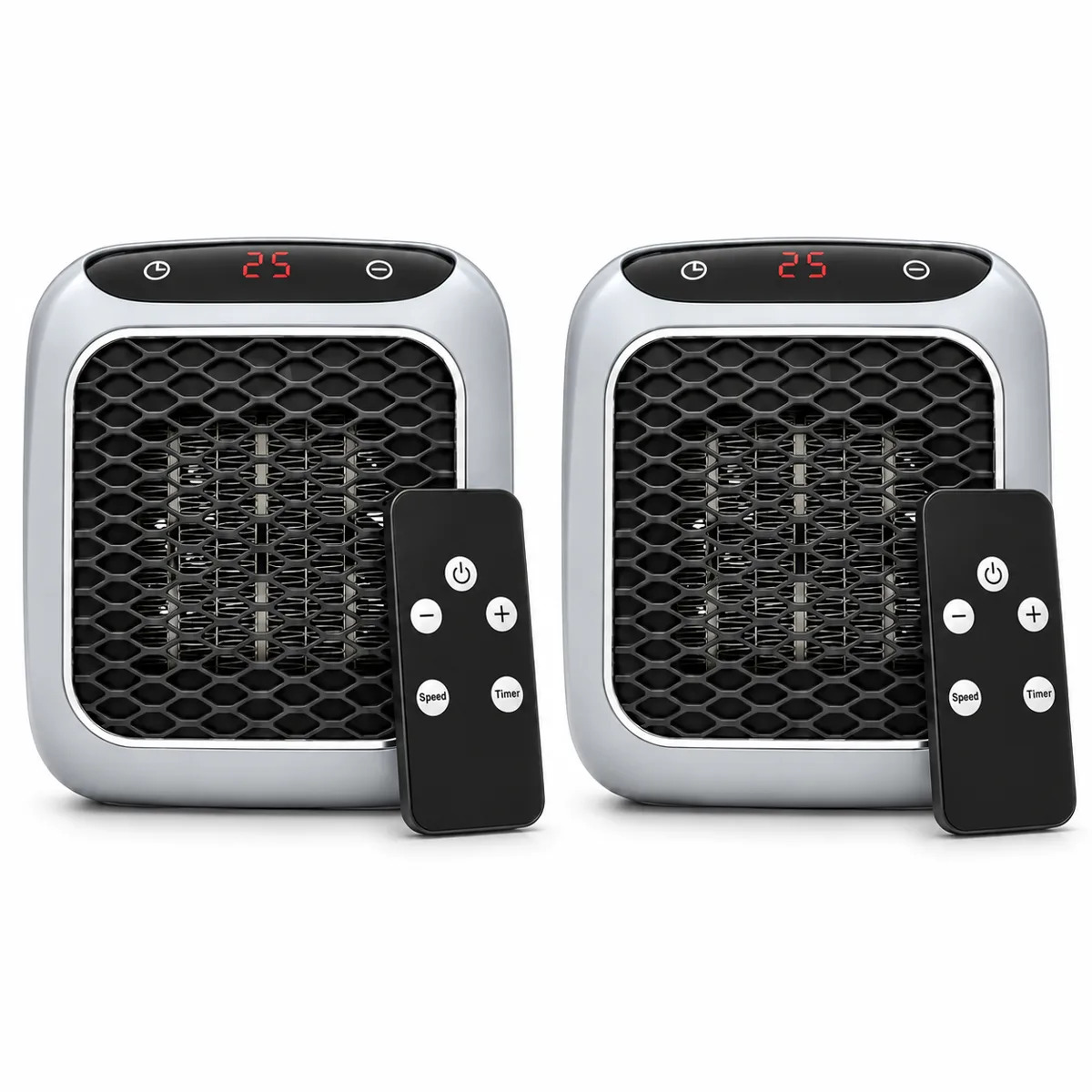
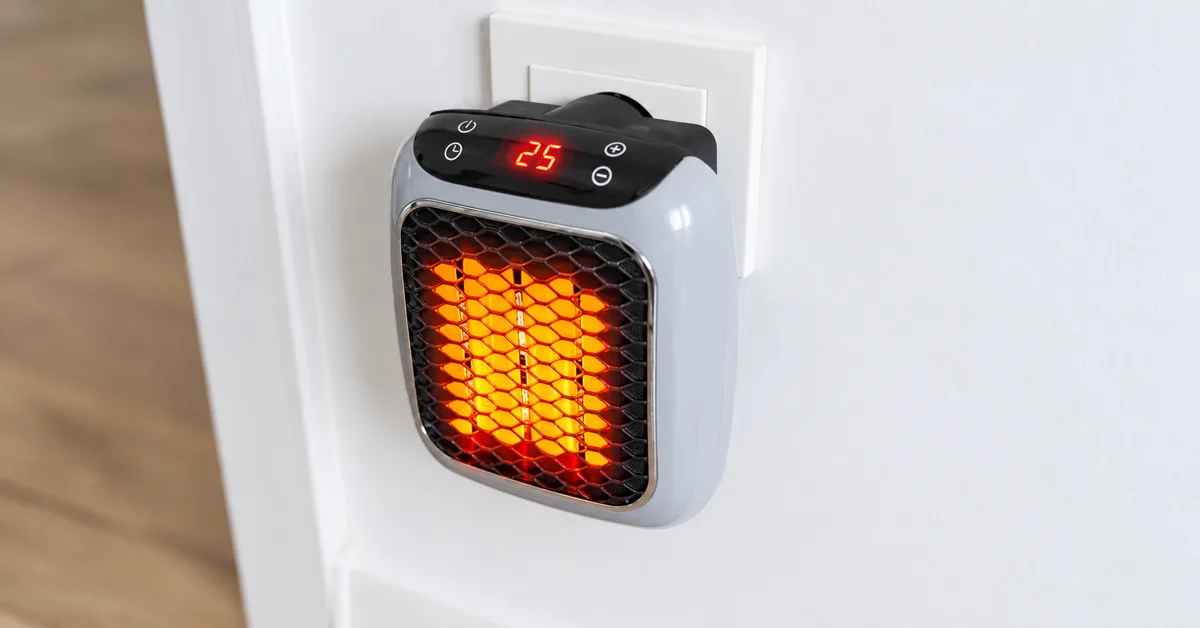
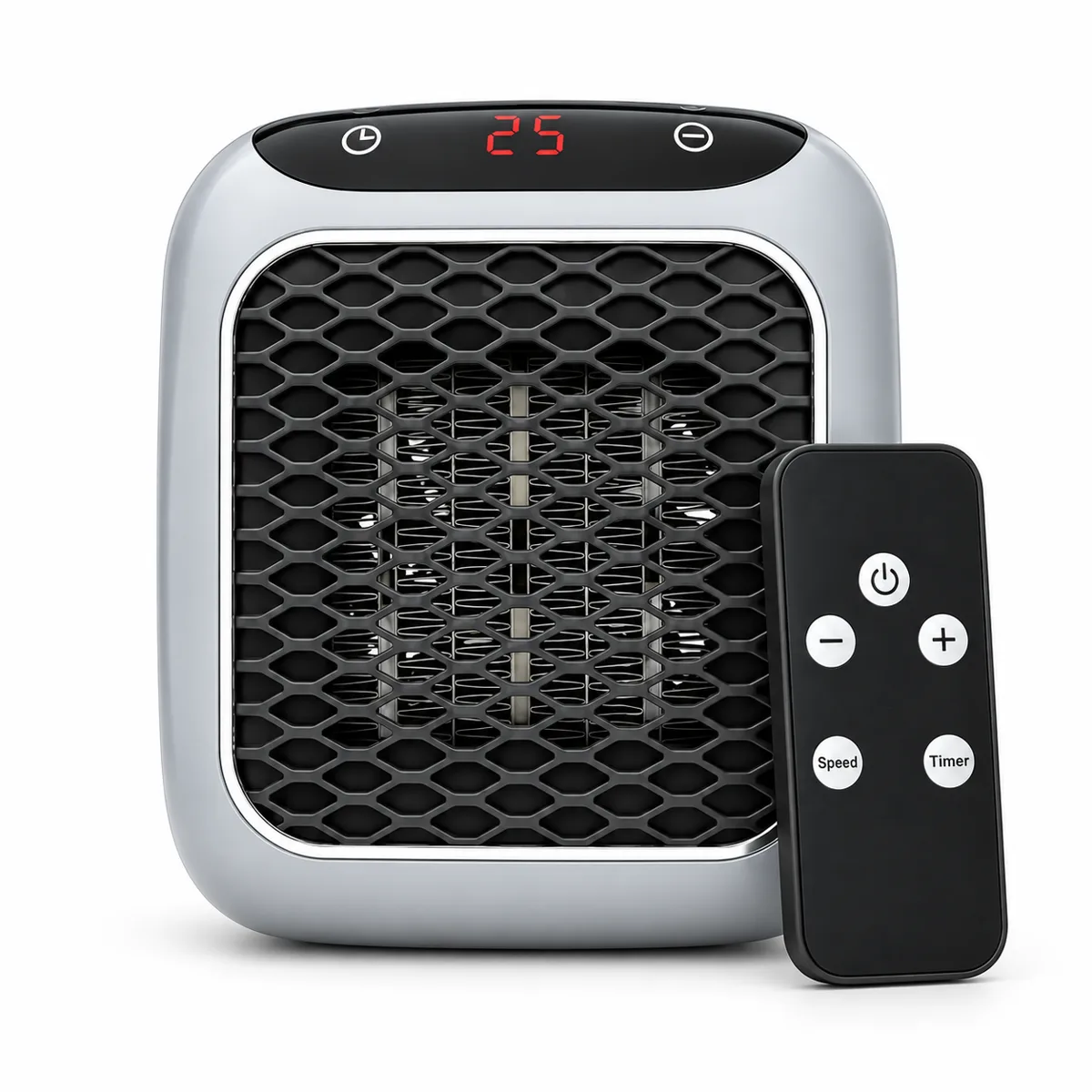
RapidHeat is a plug-in wall-socket ceramic heater with PTC plates, a quiet fan and an Irish/UK Type G plug. Its 400W and 800W settings target modest heating needs rather than whole-house warmth. The thermostat with LED display, programmable timer and remote control give practical ways to limit unnecessary operating time.
It also includes an antimicrobial air filter, overheat protection and auto shut-off. These are product features, not evidence of air-treatment health benefits or a substitute for supervision. At about 45 dB it is not silent. If a socket-mounted design appeals, see the plug-in heater buying guide before choosing where it will go.
How much will an electric heater cost to run?
Cost per hour at full power
- RapidHeat · low (400W)€0.14
- RapidHeat · high (800W)€0.28
- Halogen heater (1,200W)€0.42
- Oil radiator (1,500–2,500W)€0.53–€0.88
- Fan heater (2,000W)€0.70
| Heater type | Typical power | Cost per hour* |
|---|---|---|
| RapidHeat (low) | 400W | €0.14 |
| RapidHeat (high) | 800W | €0.28 |
| Fan heater | 2,000W | €0.70 |
| Oil-filled radiator | 1,500–2,500W | €0.53–€0.88 |
| Halogen heater | 1,200W | €0.42 |
Compare electricity use before comparing claims about cheap heat. The figures below assume each heater draws its stated power for a full hour; they are not a promise that the heaters will produce the same warmth. An 800W heater supplies less heat per hour than a 2,000W heater running continuously.
RapidHeat on low for four hours uses 1.6kWh: about €0.56 a day, or roughly €17 over a 30-day month at this example rate. Four hours on high would be €1.12 a day, or €33.60 over 30 days. Multiply by the number of heaters running, and use the unit rate on your own bill for a personal estimate.
*At full power and an electricity unit rate of €0.35/kWh, close to typical Irish standard tariffs. Thermostats cycle heaters off once a room is warm, so real costs are usually lower.
What room size can RapidHeat warm?
| Room or setting | Practical guidance |
|---|---|
| Small enclosed room, up to about 12 m² | Potential fit; insulation and heat loss still matter. |
| Room above about 12 m² | Do not rely on RapidHeat as the only heater. |
| Large open-plan living space | Choose heating sized for the full heat demand. |
| Poorly insulated conservatory | Not suitable as the sole source of warmth. |
| Bathroom or wet area | Not suitable: RapidHeat is not IP-rated. |
RapidHeat is intended for a small room up to about 12 m² and can warm that sort of space in under five minutes. Treat this as a small-room indication, not a guarantee of reaching a particular temperature in every home. A cold outside wall, draughty window or high ceiling increases the heat needed.
Measure the floor area by multiplying length by width, then consider insulation and the starting temperature. Even a room below 12 m² can lose heat faster than an 800W heater replaces it. Keep expectations modest during a cold spell and use a more suitable heating source if the room remains uncomfortable.

1. Small bedroom
Up to about 12 m² with the door closed. Use the timer rather than running it overnight.
2. Home office / box room
Warms the room you work in while the rest of the house stays off.
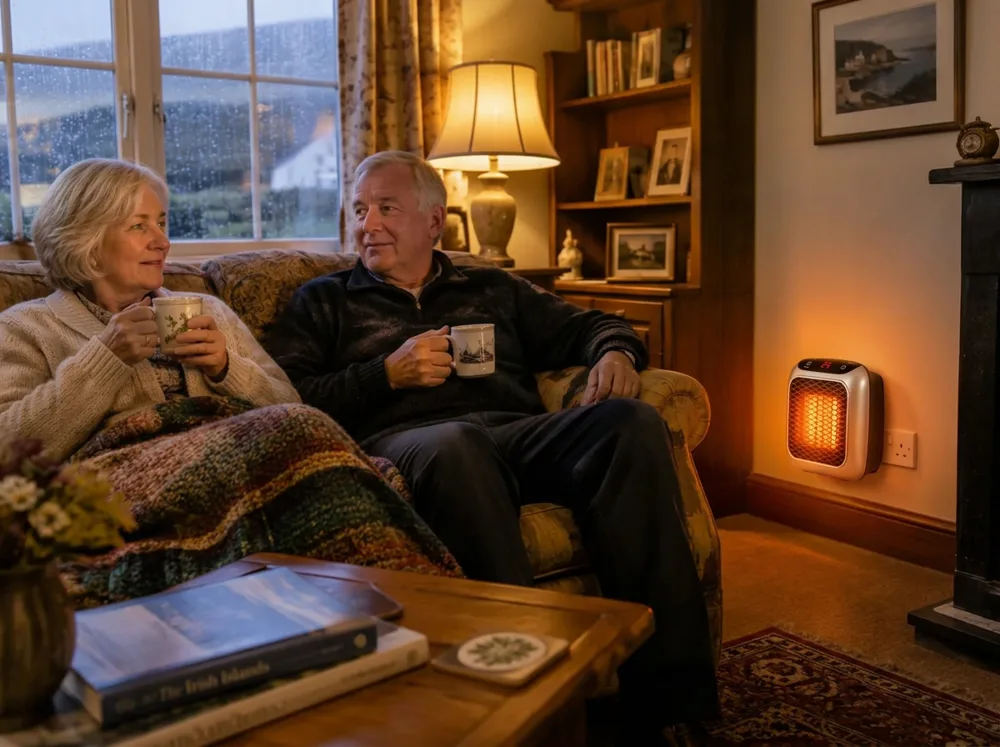
3. Sitting room
A top-up for a small, closed room; not enough alone for a large or open-plan space.
Conservatory or bathroom
Conservatories lose heat too fast; RapidHeat has no IP rating, so never use it in a bathroom.
What are the advantages and limits of a small heater?
A compact heater can be easier to move between suitable rooms and avoids dedicating floor space to a radiator. Low-power operation can suit a room that needs only a little extra warmth. A timer is particularly useful for a predictable routine, such as an afternoon working from home or reading before bed.
The limitations are output and position. RapidHeat cannot deliver the heat of a larger appliance running at higher wattage, and its wall socket must remain clear of furniture and fabrics. Buying two small heaters is not automatically better than buying one correctly sized heater. Think about total cost, total demand and whether the room itself is suitable.
Good for
One small room, low cost per hour, quick warmth where you sit, no installation, thermostat and timer to avoid waste.
Not for
Whole-house heating, large or open-plan rooms, draughty conservatories, bathrooms, or use with an extension lead.
Which bundle should an Irish household buy?
Prices include VAT and free Irish delivery. Your choice is saved in the order box.
RapidHeat costs €59 for one, usually €118, €89 for two, €119 for three and €179 for four, including VAT. The most popular option is the 2-pack. The 3-pack is best value at €39.67 per heater, with a stated saving of €235, but only makes sense if you genuinely need three units.
For a household using separate small rooms at different times, a multi-pack can save moving one unit around. Running all units together increases electricity use in proportion to their settings and hours. Optional delivery protection is €4.95. Check the bundle price breakdown and the returns policy before ordering, rather than letting the per-unit price decide the purchase on its own.
How do you use a plug-in heater safely?
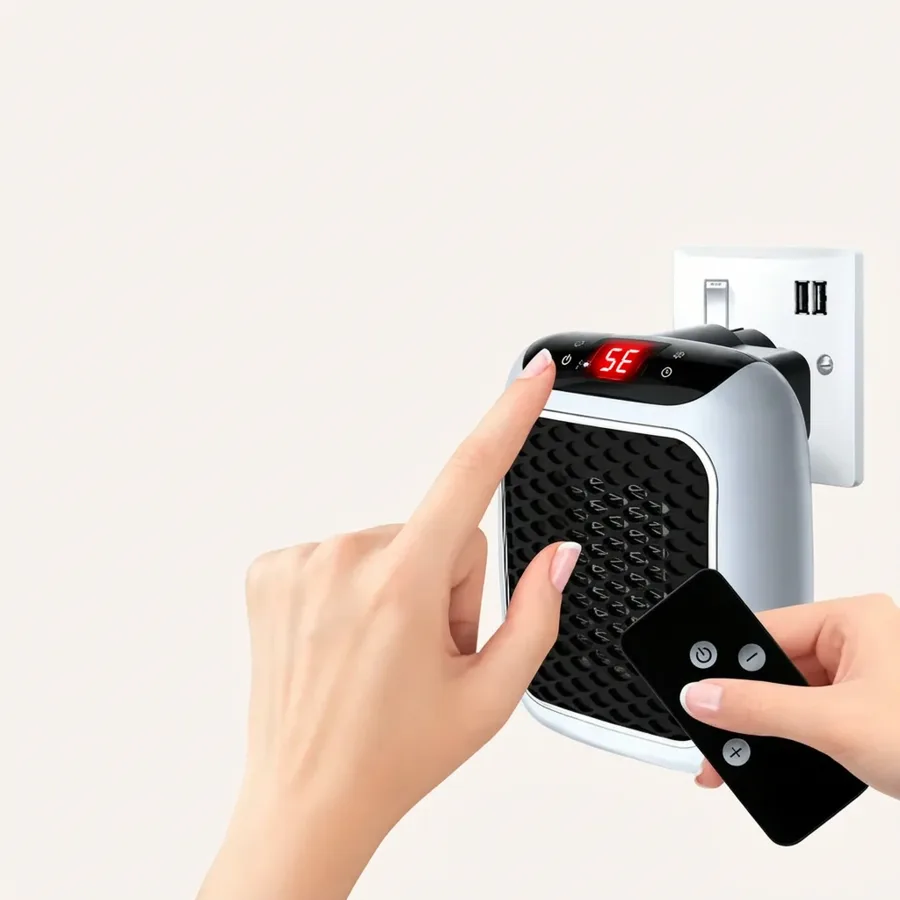
Plug RapidHeat directly into a suitable Irish/UK Type G wall socket. Do not use extension leads, cover the heater or place it where curtains, bedding or clothing can obstruct it. A socket hidden behind furniture is not a useful heating position simply because the plug will fit.
RapidHeat has overheat protection and auto shut-off, but these do not replace sensible placement or supervision. Follow the supplied instructions for positioning and operation. Stop using any heater if the plug or socket is damaged, discoloured or unusually hot, and have the problem checked rather than repeatedly switching it back on.
It is not IP-rated, so do not use it in bathroom zones or other wet areas. For a damp room, seek a heater specifically designed for that location and advice on appropriate installation. Read the RapidHeat operating instructions before first use.
- Plug straight into a wall socket, never an extension lead
- Keep curtains, bedding and clothes clear of the front
- Never use it in a bathroom or wet area unless it is made for one
- Don't leave any heater running unattended or while you sleep
- Supervise children and pets near any heater
How can you keep heating bills down in Ireland?
First reduce avoidable heat loss: close the door to the room you are using, tackle draughts where appropriate and close curtains without letting them hang near the heater. Do not block permanent ventilation. A small heater cannot make up for an open door feeding warmth into a cold hallway.
Use the thermostat for a comfortable setting rather than its maximum, and set the timer to match your actual time in the room. Start on high only when needed, then try low once comfortable. Heating an occupied room can reduce spending compared with heating unused space, but do not leave the rest of the home persistently cold or damp.
Check your electricity tariff before assuming night-rate or smart-tariff electricity is cheaper at the time you need warmth. SEAI offers information on home energy upgrades and grants; eligibility and available measures vary. Fuel Allowance may help eligible households with heating costs. These are worth checking alongside any heater purchase, not treating a new appliance as a substitute for insulation or support.
- Heat the room you're in, not the whole house
- Close doors and draw curtains after dark
- Use a thermostat and timer instead of running flat out
- Pick the lowest power that keeps you comfortable
- Check your tariff and SEAI grants for insulation
Who RapidHeat is not right for
We'd rather you buy the right heater than return the wrong one. RapidHeat probably isn't for you if:
- Households looking for one portable appliance to replace whole-house heating throughout an Irish winter.
- Anyone needing dependable sole-source heat in a large open-plan room or a poorly insulated conservatory.
- People wanting a heater for a bathroom, wet area or a position that requires an extension lead.
- Buyers who need completely silent operation: RapidHeat uses a fan and is rated at about 45 dB.
Frequently asked questions
What is the cheapest electric heater to run?
Per hour, the lowest-wattage heater is cheapest. At €0.35/kWh a 400W heater like RapidHeat on low costs about €0.14 an hour, against about €0.70 for a 2kW fan heater. Lower power also means less heat, so the cheapest heater to run is the smallest one that keeps your room comfortable.
Are electric heaters safe to leave on?
Don't leave any portable heater running unattended or while you sleep. Use one with overheat protection, a thermostat and a timer, plug it straight into a wall socket, and keep it clear of curtains and bedding.
What size electric heater do I need for my room?
Small rooms up to about 12 m² can suit a 400–800W heater like RapidHeat. Larger, colder or open-plan rooms usually need 1.5–2.5kW or central heating. Draughts, high ceilings and external walls all increase what you need.
Which electric heater is best for a small room in Ireland?
Choose a heater with output that matches the room’s heat loss and controls you will actually use. RapidHeat is an option for a small enclosed room up to about 12 m², while larger or draughtier rooms may need a higher-output alternative.
Does an oil-filled radiator keep giving free heat after switch-off?
No. It releases heat stored while it was using electricity, so the warmth after switch-off was already paid for. That gradual release may feel comfortable, but it does not make more heat from each unit of electricity.
Does a ceramic heater turn all electricity into more heat?
No. Like other resistive electric heaters, it gives about 1kWh of heat for 1kWh of electricity. Ceramic describes the heating element; lower bills depend on the heat you need, the hours of use and your tariff, not extra energy being created.
Can I leave RapidHeat on while I sleep?
Warm the bedroom while you are awake and use the timer to limit unnecessary operation. Do not treat auto shut-off as permission to leave a portable heater running unattended overnight; follow the supplied safety instructions and keep bedding well clear.
Where can I buy RapidHeat in Ireland?
RapidHeat is sold through the official Irish store, not Irish shops, Argos, Woodie’s or Amazon. Delivery is free to every county in the Republic of Ireland, with dispatch in 1–2 working days and delivery in 2–5 working days.
What plug does RapidHeat use in Ireland?
RapidHeat uses an Irish/UK Type G plug. Plug it directly into a suitable wall socket, not an extension lead, and keep airflow unobstructed.
What happens if RapidHeat does not suit my room?
There is a 30-day money-back guarantee from delivery, alongside statutory rights under Irish and EU consumer law. Read the [returns information](/returns) for the process, and contact support@rapidheatie.com if you need help; replies are within one working day.