Is RapidHeat better than an oil-filled radiator?
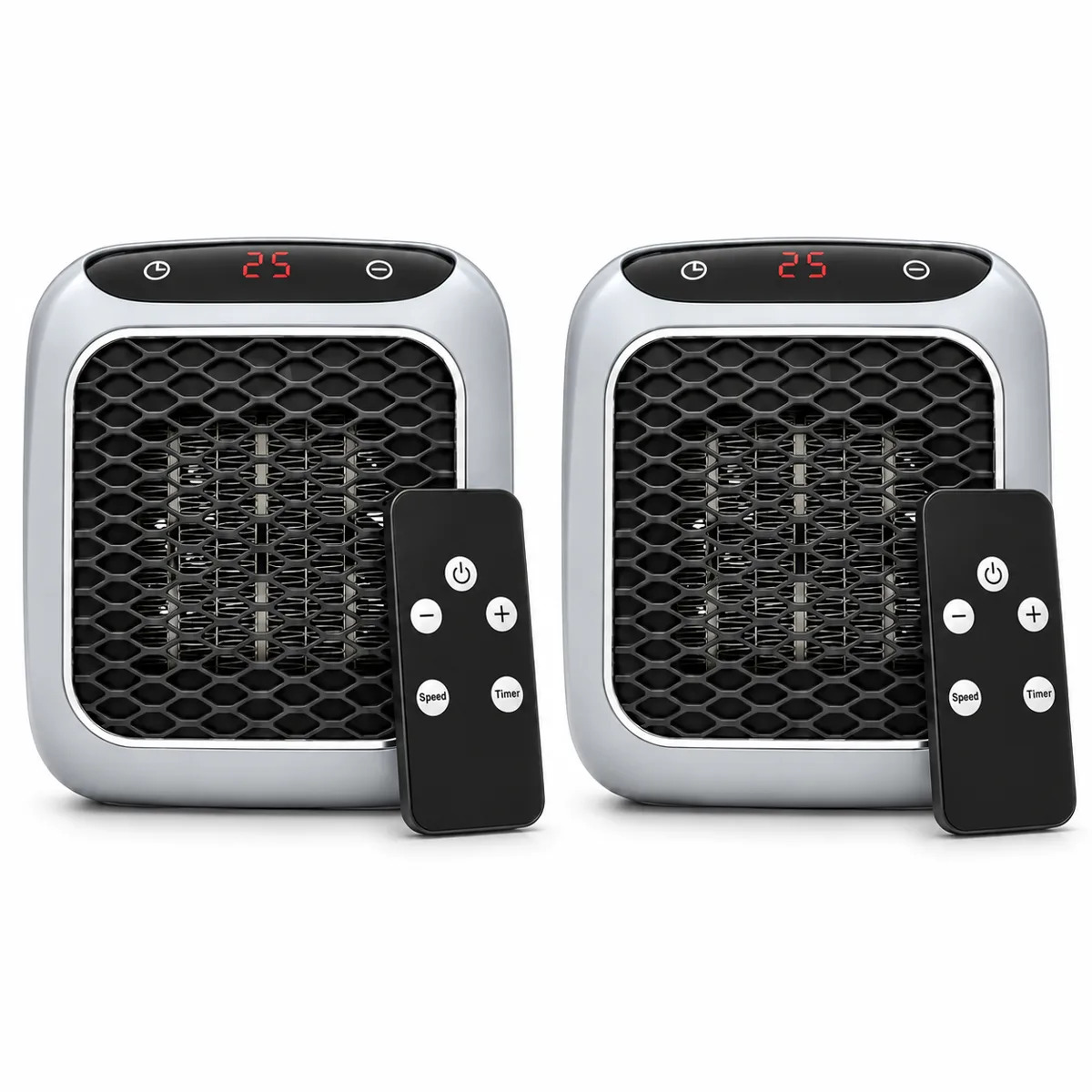
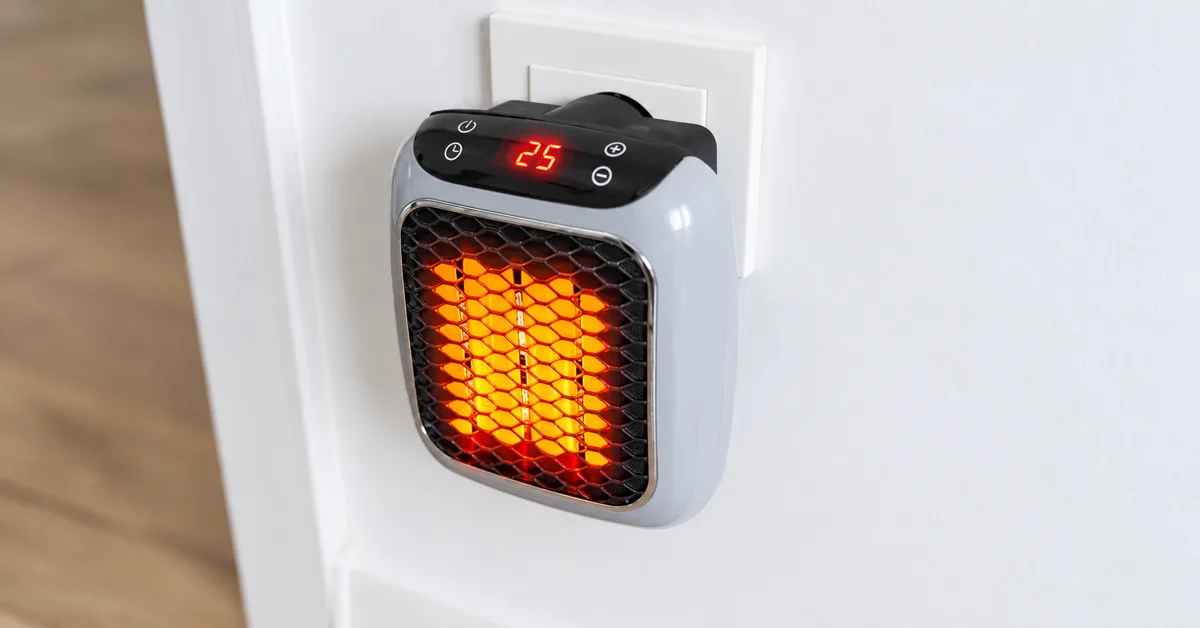
Neither heater is best for every Irish home. RapidHeat is a wall-socket ceramic heater with a fan, designed for small spaces up to about 12 m². An oil-filled radiator heats its internal oil electrically, then transfers warmth through its outer surfaces and surrounding air. Its output and controls depend on the model.
Choose by the job you need done. A spare bedroom used briefly is different from a draughty sitting room occupied all evening. In both cases, the heater must replace heat escaping through windows, walls and ventilation. A low-wattage appliance cannot maintain warmth if that loss exceeds its output.
Our guide to energy-efficient electric heaters explains why lower wattage and better efficiency are not the same thing.
How much does each heater cost to run in Ireland?
| Heater type | Typical power | Cost per hour* |
|---|---|---|
| RapidHeat (low) | 400W | €0.14 |
| RapidHeat (high) | 800W | €0.28 |
| Fan heater | 2,000W | €0.70 |
| Oil-filled radiator | 1,500–2,500W | €0.53–€0.88 |
| Halogen heater | 1,200W | €0.42 |
*At full power and an electricity unit rate of €0.35/kWh, close to typical Irish standard tariffs. Thermostats cycle heaters off once a room is warm, so real costs are usually lower.
Does lower wattage mean a lower heating bill?
At full output, RapidHeat’s 400W setting uses 0.4 kWh in an hour; its 800W setting uses 0.8 kWh. A 2kW oil radiator uses 2 kWh if it heats continuously for that hour. At €0.35/kWh, that is €0.14, €0.28 and €0.70 respectively. These are running-time comparisons, not equal-comfort tests.
All ordinary resistive electric heaters turn about 1 kWh of electricity into 1 kWh of heat. An oil radiator does not waste electricity by warming oil, and a ceramic heater does not multiply energy. The oil’s stored warmth after switching off was paid for while the element was running.
For four hours daily over 30 days, continuous RapidHeat operation costs €16.80 on low or €33.60 on high at the example tariff. A continuously heating 2kW radiator would cost €84. However, its thermostat may switch it off for part of that time, so those totals do not prove identical savings in an actual room.
Read your bill’s unit rate and compare metered electricity over similar weather and occupancy. If you add a portable heater while leaving all existing heating unchanged, your total bill can rise rather than fall.
What size room can RapidHeat or an oil heater warm?
| Room or situation | RapidHeat suitability | Oil radiator consideration |
|---|---|---|
| Small enclosed room, up to about 12 m² | Potential fit with manageable heat loss | Check output and available floor space |
| Larger enclosed room | Do not assume sufficient output | Choose output for the room’s heat loss |
| Open-plan space or draughty conservatory | Not suitable on its own | May also need a different heating solution |
| Bathroom or wet area | Not suitable: no IP rating | Use only equipment approved for the location |
RapidHeat is intended for a small room up to about 12 m². Measure floor length multiplied by width, but also consider ceiling height, insulation and draughts. A room within the area guide can still lose too much heat on a cold evening.
Oil radiators come in different outputs, so there is no dependable room-size promise for the whole category. Follow the particular model’s room guidance rather than assuming any oil heater will warm a large room.
Which heater feels warm sooner?
RapidHeat uses PTC ceramic plates and a quiet fan to spread warm air. It is described as warming a suitable small room in under five minutes, but room conditions matter: an open door, cold walls or poor insulation can change the result. This is not a guarantee that every room reaches your chosen temperature within five minutes.
An oil-filled radiator generally feels more gradual because its internal oil and body need to warm. Once hot, it continues releasing stored heat after the element stops. That can feel pleasant during a long evening, though it also makes the response less immediate when your plans change.
For a short desk session, quick airflow may be useful. For several hours reading in one seat, you might prefer the steadier feel of a radiator. Neither sensation alone tells you which will cost less over the whole evening.
Which is better for bedrooms and home offices?
RapidHeat takes no floor space because it plugs into the wall socket. That can help in a small study where a freestanding radiator would crowd a chair or walkway. It still needs a clear socket position with unobstructed airflow, away from papers, curtains and furniture.
Its fan is about 45 dB, so quiet does not mean silent. An oil-filled radiator has no circulation fan, although thermostats may click and appliances can make expansion sounds. If you are sensitive to noise while reading or working, consider that before choosing.
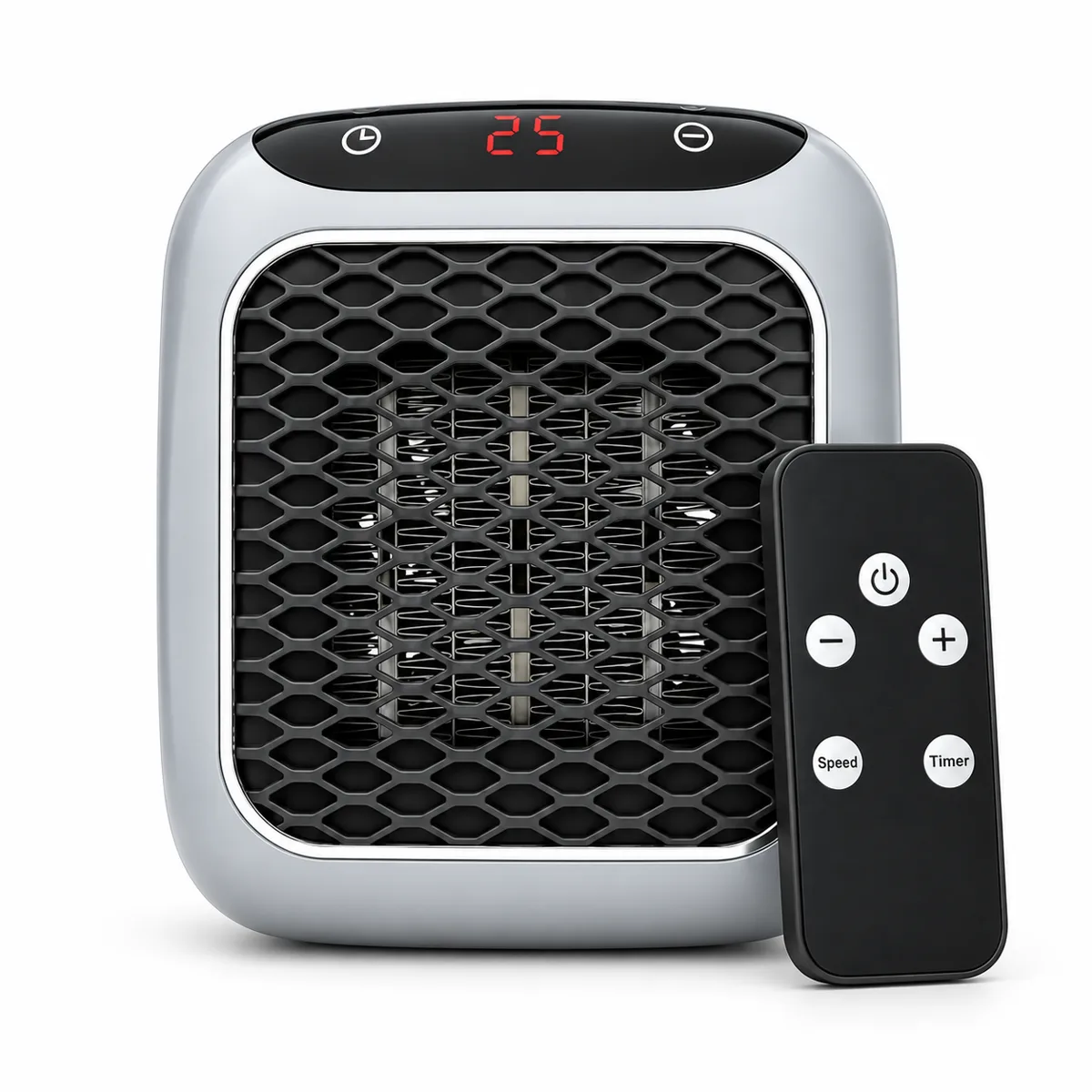
The adjustable thermostat, LED display, timer and remote make RapidHeat convenient when the socket is safely positioned. Do not select a socket hidden behind a bed just because remote control is available. See our small-bedroom heater guide for room-specific considerations.
For bedrooms, use portable heat while you are awake and present, then switch it off before sleeping. A timer is a useful backup, not permission to leave a portable heater unattended overnight.
What are the honest pros and cons of both heaters?
A fair comparison separates convenience from heating capacity. RapidHeat’s controls can make short sessions easier, while an oil radiator’s slower response may be perfectly acceptable when you occupy the same room for hours.
- RapidHeat advantages: compact wall-socket format, 400W and 800W settings, thermostat, programmable timer and remote control.
- RapidHeat limitations: small-room output, audible fan and a need for a suitable exposed wall socket; it is not a whole-house system.
- Oil radiator advantages: no fan-driven airflow and gradual warmth that can suit extended occupancy.
- Oil radiator limitations: floor space, a hot surface and slower response; controls, mobility and safety features vary by model.
- Both require sensible positioning, an appropriate electrical supply and enough output for the room; neither fixes damp, draughts or poor insulation.
How can you reduce heating costs without losing comfort?
Start with the room, not the shopping basket. Close an internal door while preserving necessary ventilation, use curtains without obstructing the heater, and address avoidable draughts. Keep a comfortable temperature rather than turning a thermostat high in the hope it makes the heater exceed its rated output.
With RapidHeat, try high for the initial warm-up if needed, then low if it maintains comfort. Use a timer for a planned session and switch off when you leave. If low cannot keep the room comfortable, a smaller hourly number is not a useful saving.
Zoning can help when you safely reduce heating elsewhere, but do not leave occupied rooms uncomfortably cold or ignore condensation and frost risks. SEAI provides information about energy improvements and available grants; Fuel Allowance may help eligible households with heating costs.
Compare your actual tariff, including any smart or night-rate periods. Cheap electricity at an inconvenient hour is not a reason to run an ordinary room heater in an empty space. For practical budgeting, see the cheapest way to heat a room.
Is a wall-plug heater safe compared with an oil radiator?
RapidHeat includes overheat protection and automatic shut-off, but those features do not replace safe use. Plug it directly into a suitable Irish/UK Type G wall socket. Never use an extension lead, cover the heater or place it where curtains or bedding can touch it.
It is not IP-rated, so keep it out of bathroom zones and wet areas. Keep children and pets away from the appliance, leave airflow unobstructed and follow the supplied instructions. Stop using it if the plug, socket or appliance appears damaged or overheats.
Oil radiators also need clearances and careful handling around hot surfaces. Follow the individual manufacturer’s instructions; do not assume wheels, a timer or a thermostat make every location safe. If the only available location is cramped or obstructed, neither purchase solves that problem.
Which RapidHeat bundle is worth buying?
One RapidHeat costs €59 including VAT, with a usual listed price of €118. The 2-pack is €89 and is the most popular bundle; the 3-pack is €119, or €39.67 each, and the 4-pack is €179. The 3-pack is advertised as best value with a €235 saving against three usual-price units.
Buy for rooms you will actually use, not the largest headline saving. One unit is a sensible trial for one suitable room. Two can avoid moving a heater between a study and bedroom, but running both at once doubles their combined electricity consumption at the same setting.
RapidHeat is sold through the official Irish store, not Irish shops, Argos, Woodie’s or Amazon. Delivery is free throughout the Republic of Ireland; dispatch takes 1–2 working days and delivery takes 2–5 working days. Optional delivery protection costs €4.95.
There is a 30-day money-back guarantee from delivery alongside statutory Irish and EU consumer rights. Read the current RapidHeat prices and returns information before ordering. Base the decision on room suitability and running costs.
Who RapidHeat is not right for
We'd rather you buy the right heater than return the wrong one. RapidHeat probably isn't for you if:
- Anyone needing one appliance to heat an entire house, a large open-plan living space or a poorly insulated conservatory through winter.
- Anyone who needs a heater for bathroom zones or other wet areas: RapidHeat is not IP-rated.
- Anyone who requires completely silent heating, since RapidHeat has a fan rated at about 45 dB.
- Anyone without a suitable clear wall socket who would need an extension lead to reach the room.
Frequently asked questions
Is RapidHeat cheaper to run than an oil heater?
At full power, RapidHeat costs €0.14–€0.28 per hour at €0.35/kWh, compared with roughly €0.53–€0.88 for a 1.5–2.5kW oil radiator. It also produces less heat, so these figures do not guarantee a lower bill for equal room comfort.
Does an oil-filled radiator use electricity after it switches off?
Once its heating element stops, it releases heat already stored in the oil without drawing electricity for that heat. When the thermostat calls for more warmth, the element uses electricity again.
Can RapidHeat replace my central heating?
Not as a whole-house replacement. It can provide local warmth in a suitable small room, but other rooms still need appropriate heating and protection against damp or frost.
Which heater is quieter for a bedroom?
An oil-filled radiator usually avoids fan noise, although clicks and expansion sounds can occur. RapidHeat has a fan rated at about 45 dB, which some sleepers or quiet workers may notice.
Should I buy two RapidHeat units for one large room?
Do not treat a bundle as a guaranteed solution for a large room. Assess heat loss, safe socket positions and the heating system needed; RapidHeat is intended for small-room use.
Is RapidHeat safe to leave on overnight?
Do not use it unattended while sleeping. Use its timer as a backup during attended use, keep it clear of bedding and switch it off before bed.
Can I use either heater in a bathroom?
RapidHeat is not IP-rated and must not be used in bathroom zones or wet areas. For any alternative, choose equipment specifically suitable for the location and follow professional installation advice where required.