Where do RapidHeat energy savings come from?
The useful idea is heating less space for fewer unnecessary hours, not producing free heat. Ordinary resistive electric heaters deliver about 1kWh of heat from 1kWh of electricity. RapidHeat’s ceramic plates do not change that basic relationship.
A 400W setting draws less electricity per hour than a 2kW heater, but also supplies less heat. If it keeps a small room comfortable, that lower output may suit the job. If the room stays cold, the smaller running-cost figure alone is not a meaningful benefit.
How much does RapidHeat cost to run in Ireland?
Cost per hour at full power
- RapidHeat · low (400W)€0.14
- RapidHeat · high (800W)€0.28
- Halogen heater (1,200W)€0.42
- Oil radiator (1,500–2,500W)€0.53–€0.88
- Fan heater (2,000W)€0.70
| Heater type | Typical power | Cost per hour* |
|---|---|---|
| RapidHeat (low) | 400W | €0.14 |
| RapidHeat (high) | 800W | €0.28 |
| Fan heater | 2,000W | €0.70 |
| Oil-filled radiator | 1,500–2,500W | €0.53–€0.88 |
| Halogen heater | 1,200W | €0.42 |
The chart shows the maximum cost per hour of each heater type at full power. RapidHeat costs less per hour because it uses less power, so it is designed for one small room rather than a whole floor. Use the calculator to work out your own figure.
*At full power and an electricity unit rate of €0.35/kWh, close to typical Irish standard tariffs. Thermostats cycle heaters off once a room is warm, so real costs are usually lower.
Work out your own RapidHeat running cost
Running cost calculator
What would RapidHeat cost you?
Setting
- Per hour
- €0.14
- Per day
- €0.56
- Per week
- €3.92
- Per month
- €16.80
Maximum cost at €0.35/kWh. The thermostat switches it off once your room is warm, so most people pay less.
Move the slider to the hours you would use RapidHeat each day and pick low or high. The calculator shows the maximum cost at €0.35/kWh; check your own bill for your exact unit rate, and remember the thermostat pauses heating once the room is warm.
What does four hours of heating cost per month?
At €0.35/kWh, four continuous hours on 400W uses 1.6kWh and costs €0.56 per day. Across 30 days, that is €16.80, or about €17. On 800W, the same schedule costs €1.12 per day and €33.60 over 30 days.
Calculate your own estimate as kilowatts × heating hours × electricity unit rate. These examples assume the element heats throughout the session. Thermostat cycling can reduce consumption, but a cold or draughty room may require sustained output.
Check your bill rather than treating the example rate as a live quote. Two heaters running on low use the same combined rated power as one on high, so buying a bundle does not make simultaneous heating free.
2 hours a day
€16.80 a month on high. A typical evening in a small sitting room or bedroom.
4 hours a day
€33.60 a month on high. A morning or afternoon in a home office.
8 hours a day
€67.20 a month on high. A full working day, before thermostat savings.
Ready to cut the cost of heating one room?
Prices include VAT and free Irish delivery. Your choice is saved in the order box.
Pick one heater for each small room you actually sit in. Most homes choose 2, and the 3-pack is the best value at €39.67 per heater. Every bundle includes free Irish delivery and the 30-day money-back guarantee.
Is RapidHeat cheaper than central heating for one room?

It can be, when you only need one small room warm. Central heating warms every radiator on the circuit, so heating the whole house just to sit in one room means paying to warm rooms nobody is using. RapidHeat uses 400W or 800W to warm only the room you are in, at about €0.14–€0.28 an hour at €0.35/kWh.
Your saving depends on your fuel, boiler, zoning, insulation and how long you would otherwise run the heating, so we don't quote a single figure. A fair test is to compare a week of evenings using RapidHeat in one room with the central heating off against a normal week, using your meter or smart-meter readings.
Central heating is still the right choice for keeping a whole house warm, protecting against damp and heating large or open-plan rooms. RapidHeat is a way to avoid heating empty rooms, not a replacement for your heating system.
When can heating one room reduce your total bill?
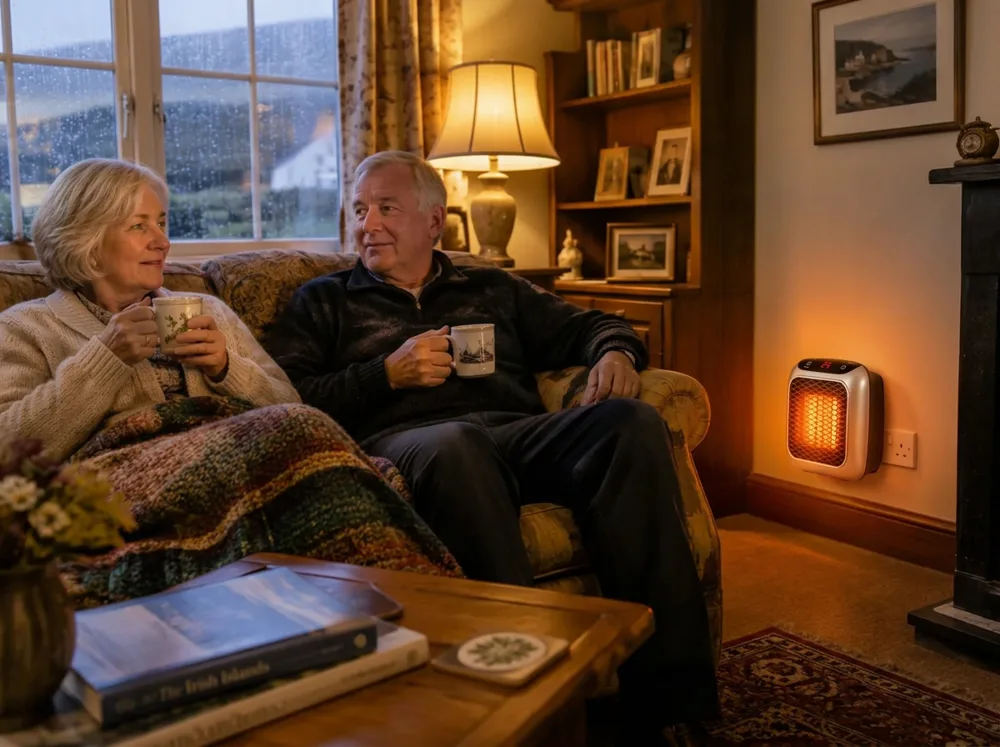
Local heating is worth considering when you occupy one small room and can safely reduce otherwise unnecessary heating elsewhere. A short home-office session can be a better fit than a household using several rooms at once.
If you leave the existing heating unchanged, RapidHeat adds electricity use. A heat pump may also provide room warmth with less electricity than resistive heating, so do not assume a plug-in heater is always the cheaper option. See the cheapest way to heat a room for the wider comparison.
Keep other rooms appropriately warm for their occupants and to manage condensation or frost risks. Zoning should be a sensible adjustment, not a reason to leave vulnerable people cold.
Which room sizes suit lower-power heating?

| Room situation | Likely fit | Energy-saving priority |
|---|---|---|
| Enclosed room up to about 12 m² | Potentially suitable | Match heating time to occupancy |
| Small room with noticeable draughts | Performance depends on heat loss | Address avoidable leaks safely |
| Large open-plan room | Not suitable on its own | Choose appropriately sized heating |
| Poorly insulated conservatory | Not suitable on its own | Improve the room before adding heat |
| Bathroom or wet area | Not suitable: not IP-rated | Use equipment approved for the location |
RapidHeat is intended for small rooms up to about 12 m². Measure length by width, then consider insulation, ceiling height and exposed walls. An area guide cannot predict every home’s heat loss.
Close an internal door where practical, but preserve required ventilation. If the room opens into a large hall or living area, your heater may be trying to warm much more than the measured floor space.
1. Small bedroom
Up to about 12 m² with the door closed. Use the timer rather than running it overnight.
2. Home office / box room
Warms the room you work in while the rest of the house stays off.
3. Sitting room
A top-up for a small, closed room; not enough alone for a large or open-plan space.
Conservatory or bathroom
Conservatories lose heat too fast; RapidHeat has no IP rating, so never use it in a bathroom.
How should you use the thermostat and timer?
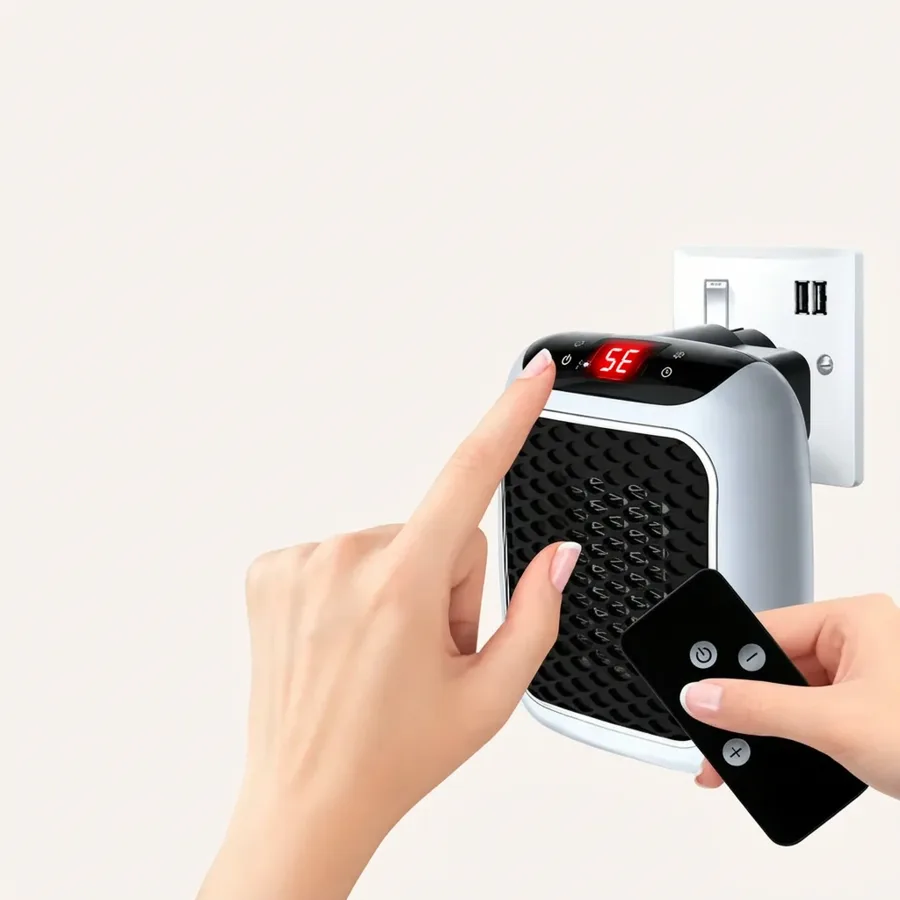
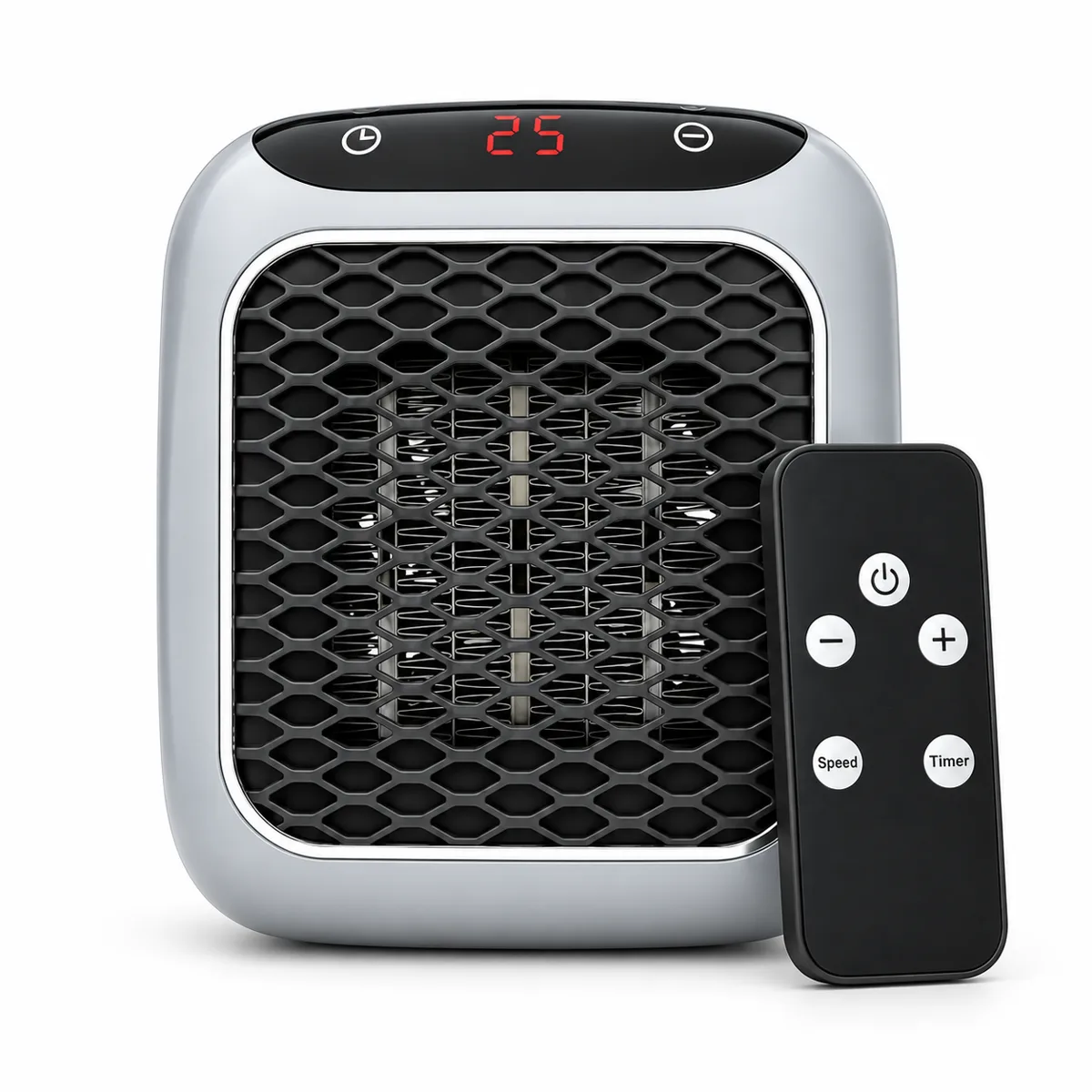
Use high if the room initially needs more heat, then try low once comfortable. RapidHeat has an adjustable thermostat with LED display and a remote. A very high target does not increase output beyond the selected power setting.
The thermostat stops calling for heat when its target is reached and resumes as the room cools. The timer limits a planned session; switch the heater off when you leave rather than relying on memory later. Read how RapidHeat works before first use.
A timer is not permission for unattended overnight heating. Use the appliance while awake and present, and switch it off before sleeping.
- Heat the room you're in, not the whole house.
- Close the door to keep warmth in (keep vents open).
- Set the thermostat to a comfortable temperature, not the maximum.
- Use the timer so it never runs longer than planned.
- Start on high, then switch to low once the room is warm.
- Switch off when you leave the room.
What else helps keep warmth in an Irish home?
Small improvements can help any heating system. Close curtains after dark without allowing fabric near the heater, avoid blocking heat with furniture and deal with obvious draughts without sealing ventilation. Insulation improvements address the heat loss that appliances must continually replace.
SEAI provides information about home energy improvements and grants. Fuel Allowance may help eligible households meet heating costs. Check current eligibility rather than assuming either programme automatically applies to your home.
Smart or night-rate tariffs can help if cheaper hours match genuine use. An ordinary room heater is not a storage heater, so heating an empty room long before you need it may simply allow more heat to escape.
What are the advantages and limits of RapidHeat?
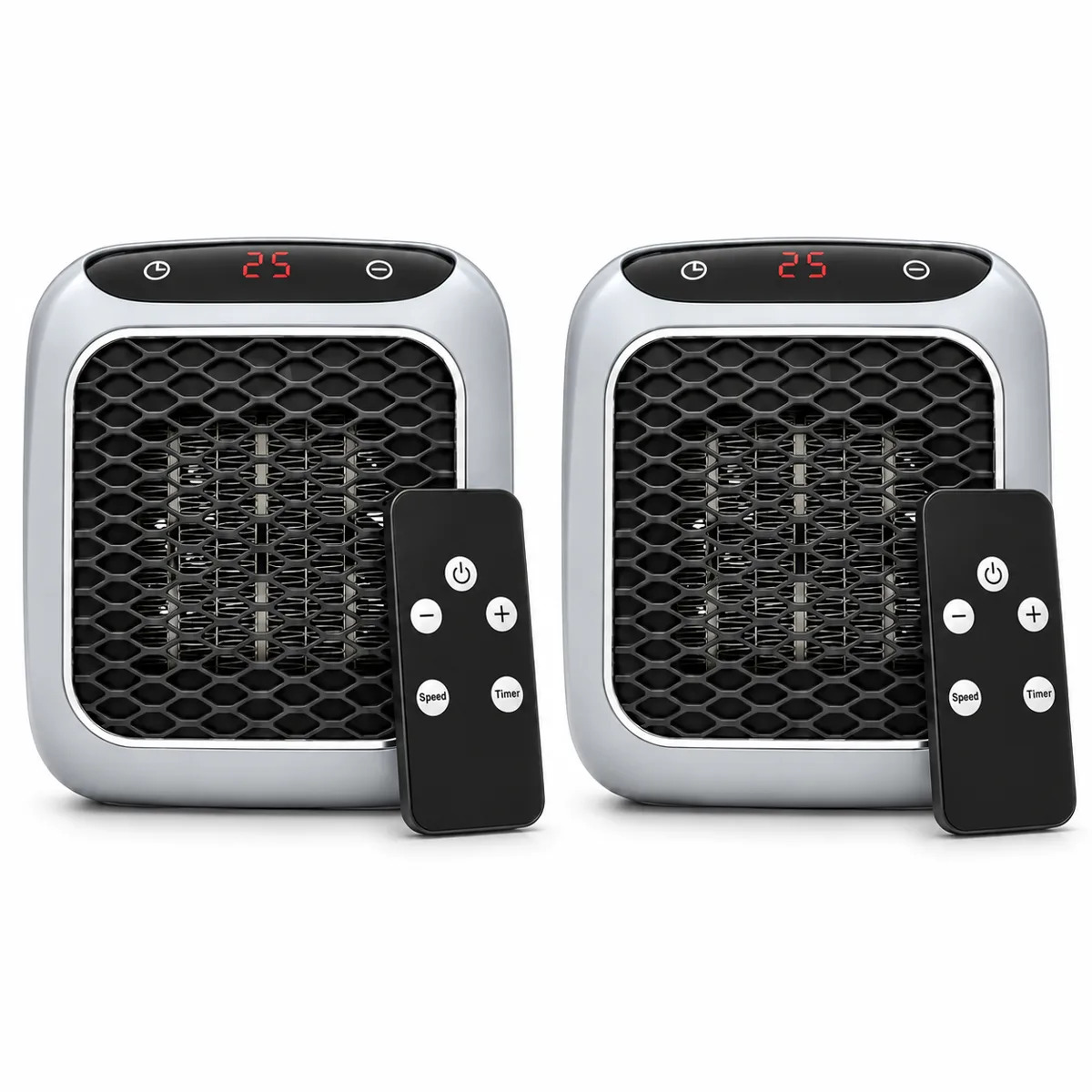
RapidHeat’s wall-socket format avoids taking floor space, and its 400W/800W options suit modest heating tasks. PTC ceramic plates and a fan spread warmth; the stated small-room warm-up is under five minutes, with results depending on conditions.
The fan is about 45 dB, so the heater is not silent. Its antimicrobial air filter does not establish any health benefit or replace ventilation. Compare comfort and room suitability rather than treating extra features as proof of energy savings.
- Useful: local warmth, adjustable thermostat, programmable timer and remote control for a suitable small room.
- Limited: lower maximum heat output than larger heaters, audible airflow and a need for a clear wall socket.
- Not proven: a fixed household saving or independent performance results. Actual costs depend on your tariff and heating schedule.
Good for
One small room up to about 12 m², low cost per hour, quick warmth where you sit, thermostat and timer to avoid waste, no installation.
Not for
Whole-house heating, large or open-plan rooms, draughty conservatories, bathrooms or wet areas, or use with an extension lead.
How do you save energy without compromising safety?
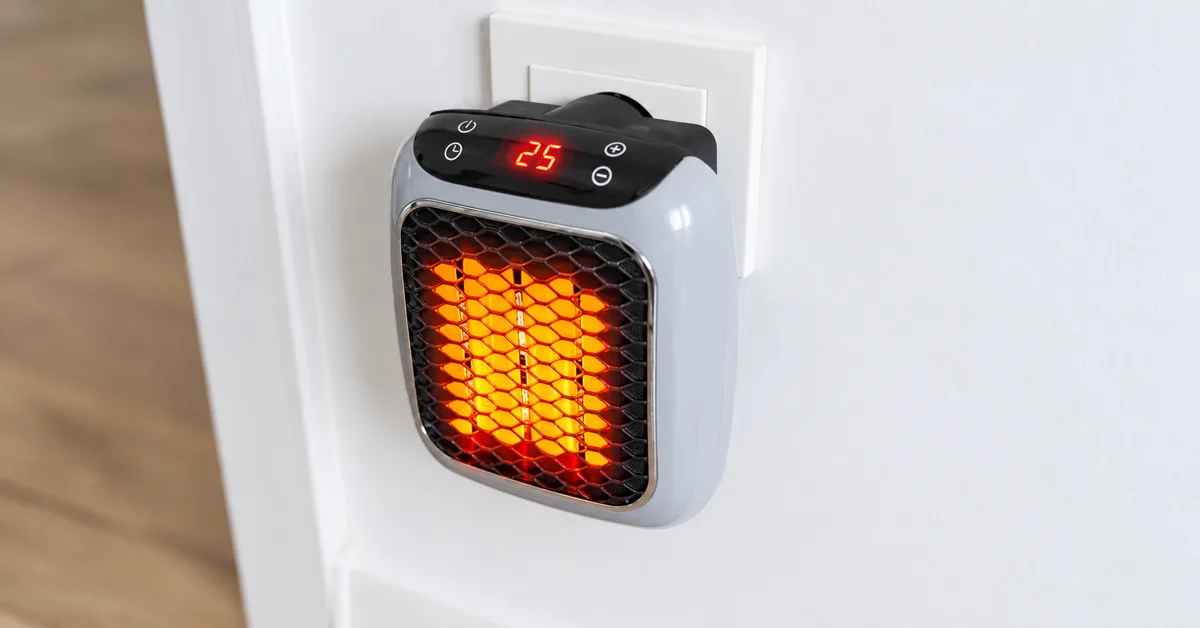
Plug RapidHeat directly into a suitable Irish/UK Type G wall socket. Never use an extension lead, cover the heater or position it against curtains or bedding. Keep airflow clear and follow the supplied instructions.
Overheat protection and automatic shut-off are safeguards, not substitutes for supervision. RapidHeat is not IP-rated: do not use it in bathroom zones or wet areas. Stop using a damaged appliance or a socket showing signs of overheating.
Do not reduce heating to an uncomfortable level just to reach a target bill. Health, safe electrical use and adequate warmth matter more than a small reduction in daily consumption.
- Plug straight into a wall socket, never an extension lead
- Keep curtains, bedding and clothes clear of the front
- Never use it in a bathroom or wet area
- Don't leave it running unattended or while you sleep
- Use the timer instead of leaving it on all evening
How can you check whether the change was worthwhile?
Record your tariff, heating hours and a few notes about comfort before changing the routine. Compare similar days afterwards, allowing for weather, other appliances and how many rooms were occupied. A lower total on one mild day is not proof of heater savings.
Include the purchase cost: one unit is €59, two €89, three €119 and four €179 including VAT. The 3-pack works out at €39.67 each, but only buy extra units if you need them. Read RapidHeat prices rather than choosing by a discount alone.
The official Irish store offers free Republic of Ireland delivery and a 30-day money-back guarantee from delivery, alongside statutory rights. Check returns details if you are assessing whether one unit meets your needs.
Who RapidHeat is not right for
We'd rather you buy the right heater than return the wrong one. RapidHeat probably isn't for you if:
- Anyone expecting guaranteed percentage savings regardless of their existing heating system or electricity tariff.
- Households needing a whole-house heating system or warmth across large open-plan rooms.
- People trying to heat a poorly insulated conservatory with one small appliance.
- Anyone intending to use the heater in bathroom zones, wet areas or through an extension lead.
Frequently asked questions
How much does RapidHeat cost per month?
At €0.35/kWh, 4 hours a day costs up to €16.80 a month on low (400W) or €33.60 on high (800W). Two hours a day on low is about €8.40 a month. The thermostat usually brings the real figure lower.
Is RapidHeat cheaper than central heating for one room?
It can be when you only need one small room warm and you turn down heating elsewhere. If your central heating stays on as normal, RapidHeat adds cost. A heat pump may be cheaper per unit of heat than any plug-in heater.
How many kWh does RapidHeat use?
0.4 kWh per hour on low and 0.8 kWh per hour on high at full output. The thermostat pauses heating once your room reaches the set temperature, so actual use is often less.
Does RapidHeat really save electricity?
It can reduce electricity used for local heating when its lower output meets the room’s needs or when it replaces unnecessary heating elsewhere. It cannot guarantee a lower total bill and is not inherently more efficient than other resistive heaters.
How much electricity does RapidHeat use on low?
At 400W, it uses 0.4kWh for each hour of continuous heating. At €0.35/kWh, that costs €0.14 per hour.
Is ceramic heating more efficient than oil-filled heating?
Both convert roughly one unit of electricity into one unit of heat. Delivery speed, controls, output and room use explain practical differences rather than special ceramic efficiency.
Should I leave RapidHeat running all day on low?
Only heat when the room needs it and you are present. Continuous low use can still add up, and it may not keep a high-heat-loss room comfortable.
Does the thermostat reduce the bill?
It can avoid continued heating after the selected temperature is reached. The actual reduction depends on the target, room heat loss and how long you use the appliance.
Can I use RapidHeat with cheaper night electricity?
You can benefit from your tariff when those hours match an attended heating need. Do not leave it on overnight unattended or preheat an unused room simply because electricity is cheaper.
Is RapidHeat cheaper to run than an oil heater per month?
Per hour, yes. At €0.35/kWh, 4 hours a day for 30 days costs about €16.80 on low and €33.60 on high, compared with roughly €63–€105 for a 1.5–2.5kW oil radiator. The oil radiator gives more heat, so it suits bigger rooms.
Does RapidHeat use a lot of electricity?
No. It draws 400W on low and 800W on high, which is 0.4 or 0.8 kWh per hour at most. The thermostat reduces that further once the room is warm.