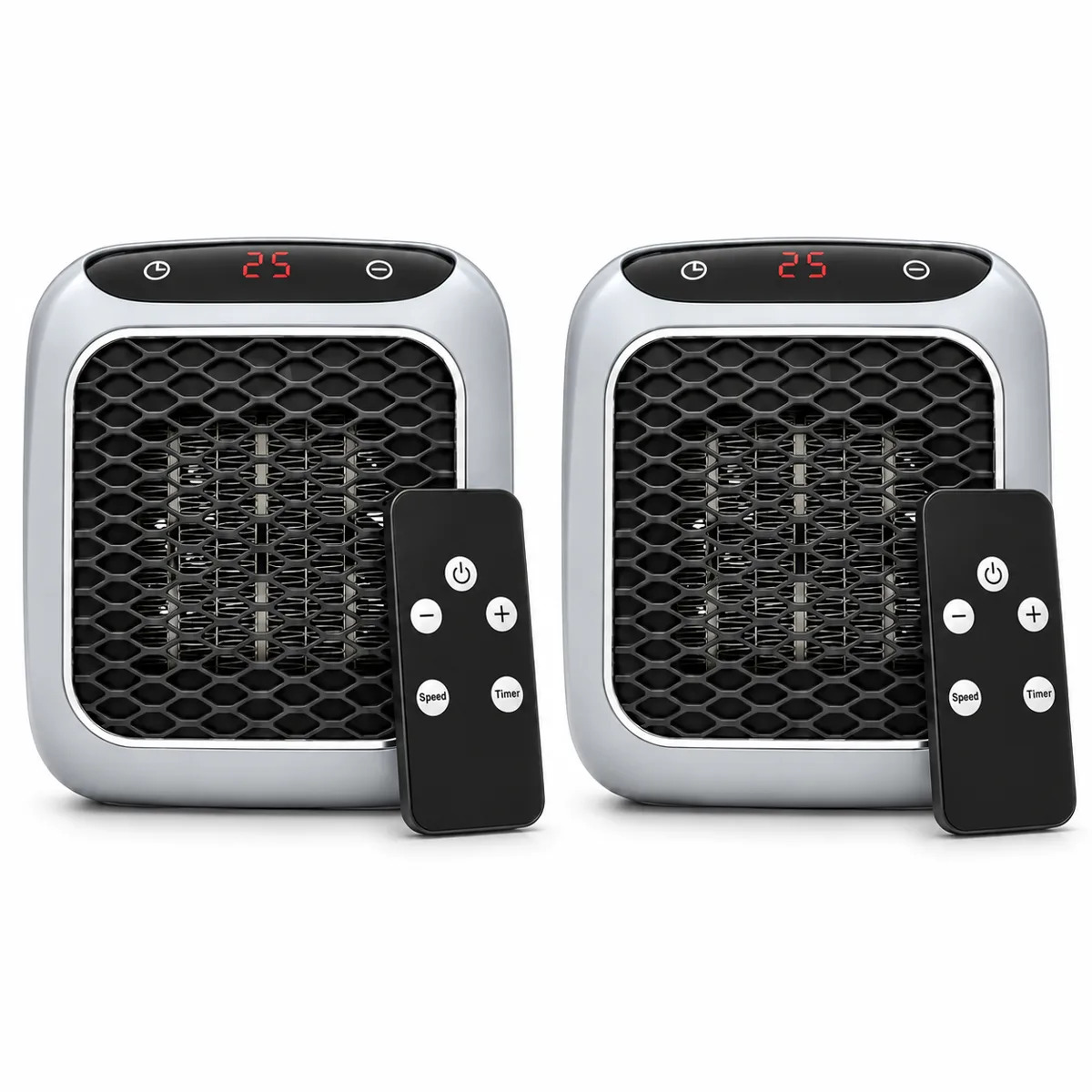
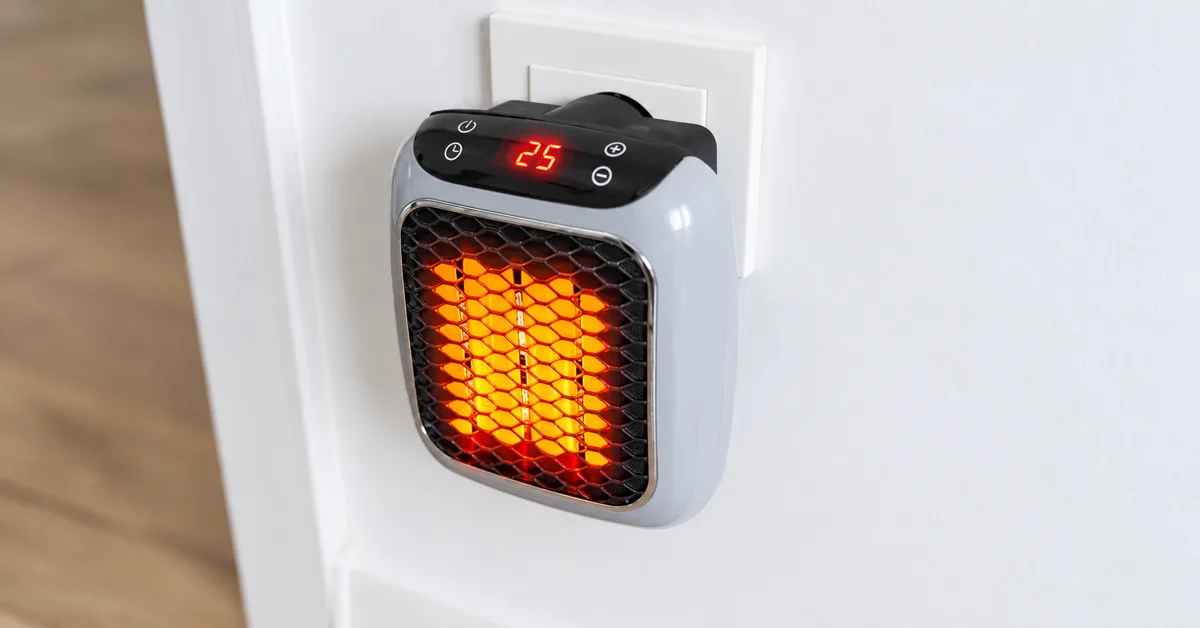
What do the ceramic plates do inside RapidHeat?
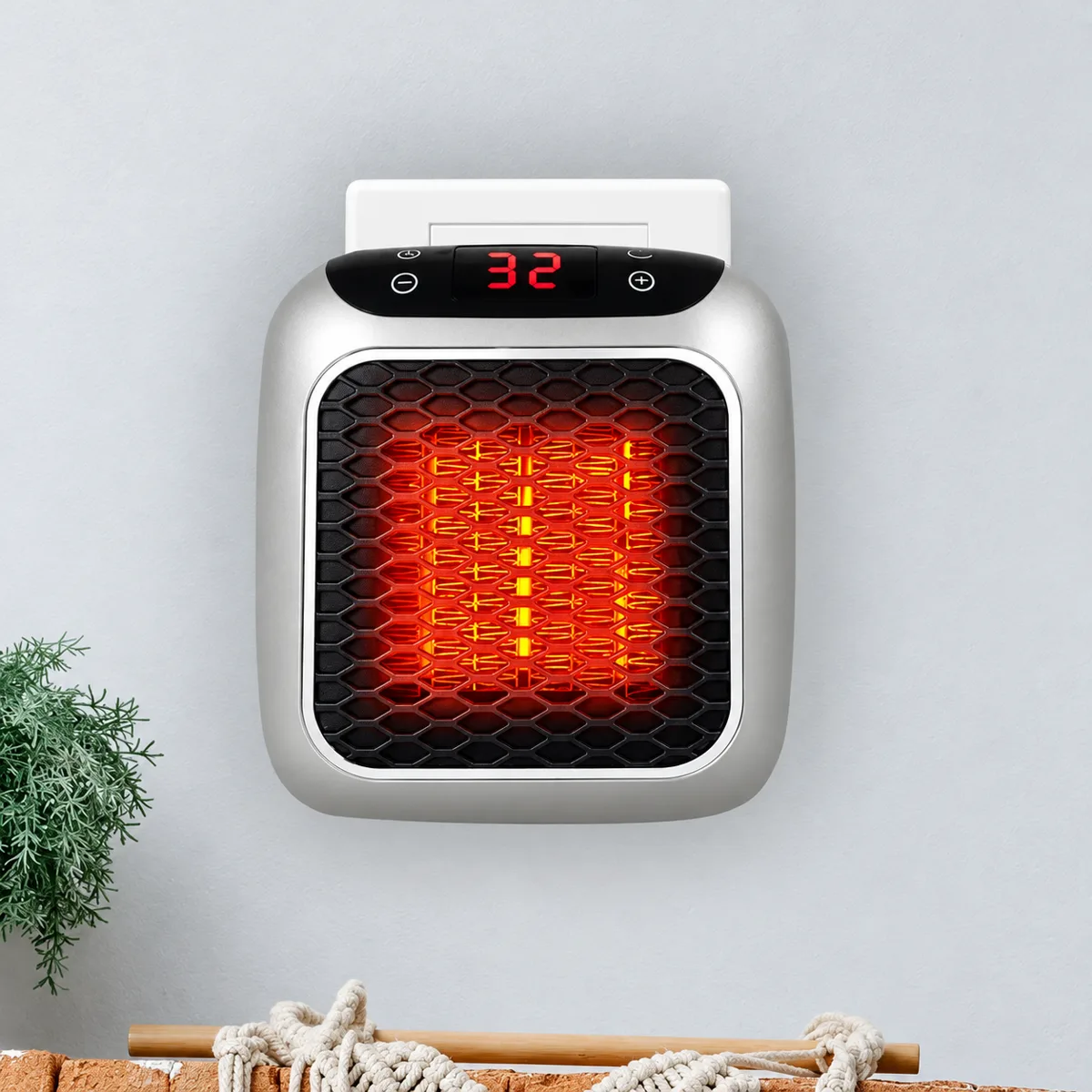
Inside RapidHeat
- 1Wall socketPower flows straight from your Irish 3-pin socket. No cable, no installer.
- 2Ceramic plates heat upPTC ceramic plates warm quickly and limit their own temperature.
- 3Quiet fan pushes warm airAir is drawn over the plates and sent into the room (about 45 dB).
- 4Thermostat takes overWhen the room reaches your set temperature, heating pauses, then restarts as it cools.
PTC stands for positive temperature coefficient. The ceramic material’s electrical resistance increases as it warms, helping limit the heating element’s temperature. Electricity passing through the element produces the heat that the fan then carries into the room.
This is still resistive electric heating: roughly 1kWh of electricity gives 1kWh of heat. Ceramic technology does not multiply energy or guarantee a particular bill saving. Its practical role is supplying heat within a compact appliance; see our ceramic heater guide for the broader explanation.
How does the fan spread warm air?
The fan draws air across the heated plates and sends the warmed air back into the room. Air circulation helps warmth reach the occupied space rather than relying only on natural air movement around a hot surface. Keep the appliance’s airflow unobstructed.
RapidHeat is described as warming a suitable small room in under five minutes. Starting temperature, insulation and draughts affect the result, so this is not a promise that every room reaches a selected thermostat temperature that quickly.
The fan is about 45 dB. That may be acceptable for daytime use but can still be noticeable during quiet reading or calls. The antimicrobial air filter is a product feature, not evidence of medical benefits, air purification performance or a replacement for ventilation.
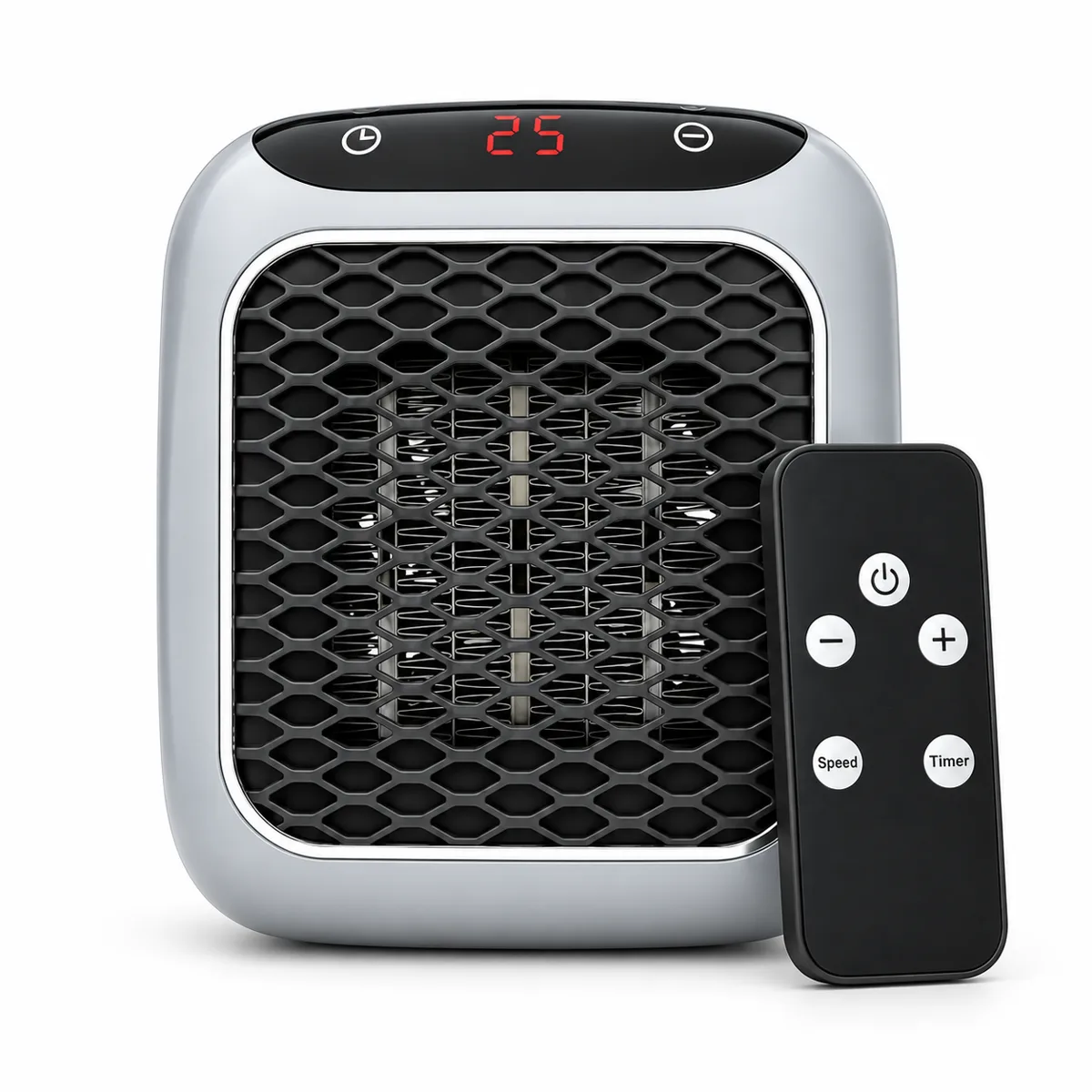
What is the difference between 400W and 800W?
Low is 400W and high is 800W. High provides more heat while drawing more electricity; low can suit maintaining warmth once a small room is comfortable. If the room is losing heat faster than low can replace it, low will not maintain the same temperature.
Try the setting that meets the need rather than assuming the smallest number is always best. A very high thermostat target cannot make the heater exceed its selected rated output. For complete day-to-day guidance, read RapidHeat instructions.
Low – 400W
Keeps a warm small room comfortable. Good for a bedroom, home office or evening in the sitting room once it has warmed up.
High – 800W
For warming a cold small room quickly. Start on high, then switch to low once you're comfortable.
How do the thermostat, display and timer work?
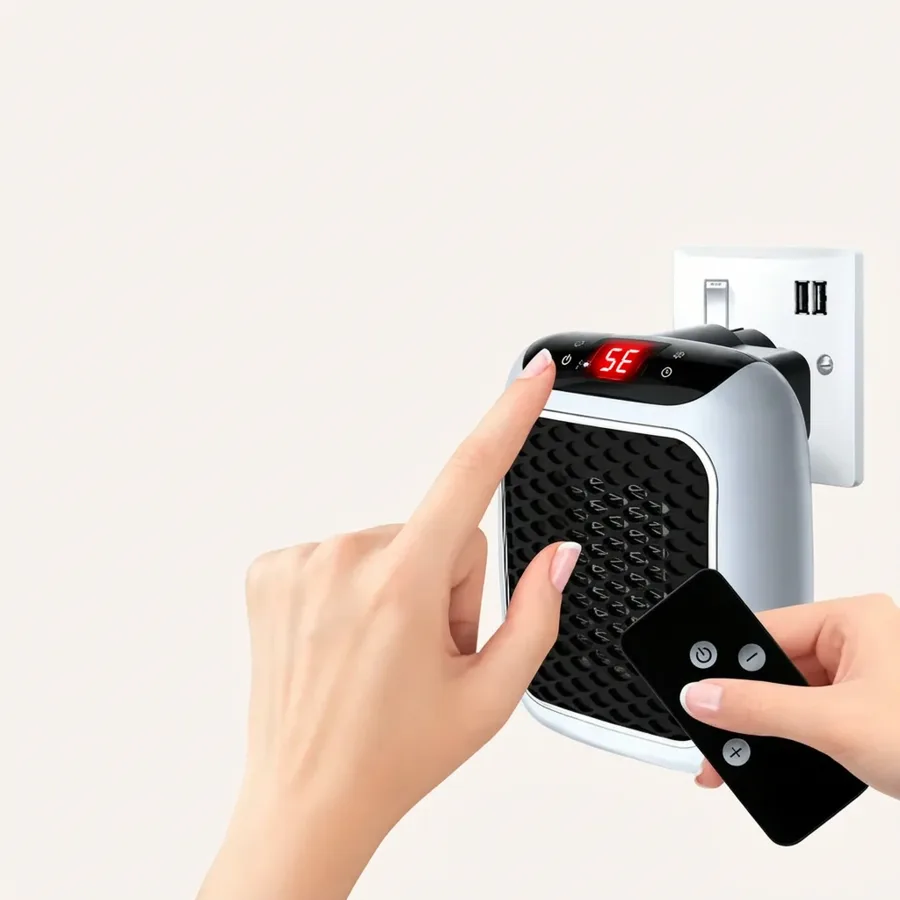
The adjustable thermostat compares the room’s sensed temperature with your chosen target. When enough warmth is reached, heating cycles off; as the room cools, heating is called for again. This avoids continuous output when it is no longer needed.
The LED display helps you view settings, while the remote provides another way to control the appliance. The programmable timer limits a planned session. Follow the supplied instructions for the exact button sequence rather than assuming a particular timer range or menu layout.
Check that the appliance is off when you finish. The timer and automatic shut-off do not make unattended use while sleeping appropriate.
How much does RapidHeat cost to run in Ireland?
| Heater type | Typical power | Cost per hour* |
|---|---|---|
| RapidHeat (low) | 400W | €0.14 |
| RapidHeat (high) | 800W | €0.28 |
| Fan heater | 2,000W | €0.70 |
| Oil-filled radiator | 1,500–2,500W | €0.53–€0.88 |
| Halogen heater | 1,200W | €0.42 |
*At full power and an electricity unit rate of €0.35/kWh, close to typical Irish standard tariffs. Thermostats cycle heaters off once a room is warm, so real costs are usually lower.
What size room is RapidHeat designed to heat?
| Space | Suitability | What to check |
|---|---|---|
| Enclosed room up to about 12 m² | Potential fit | Heat loss, airflow and safe socket position |
| Small home office | Potential fit | Papers, chair movement and fan noise |
| Large open-plan room | Not suitable on its own | Heating sized for the wider area |
| Poorly insulated conservatory | Not suitable on its own | Insulation and sustained heat requirements |
| Bathroom or wet area | Not suitable | RapidHeat has no IP rating |
RapidHeat is intended for small rooms up to about 12 m². Measure length times width, but consider ceiling height, external walls and draughts as well. A compact room with poor insulation may need more heat than its floor area suggests.
The wall-socket design saves floor space but limits you to suitable socket locations. Do not choose a hidden socket behind furniture or near bedding just because the remote can reach it.
How do you set up and use RapidHeat safely?
First read the supplied instructions and inspect the appliance. It uses an Irish/UK Type G plug and must connect directly to a suitable wall socket. Do not use an extension lead, and do not operate a damaged appliance or use a socket showing signs of overheating.
Choose a dry location with clear airflow, away from curtains and bedding. Turn on, select the power level and set a comfortable temperature using the appliance controls or remote as instructed. Stay present while assessing whether the position and setting suit the room.
Use the timer as a backup for a planned session, then switch off when leaving or before sleep. The setup steps below summarise the routine without replacing the supplied manual.
1. Plug it in
Straight into a dry, clear Irish wall socket. No tools, no extension lead.
2. Set your temperature
Pick low or high and your ideal temperature on the panel or remote.
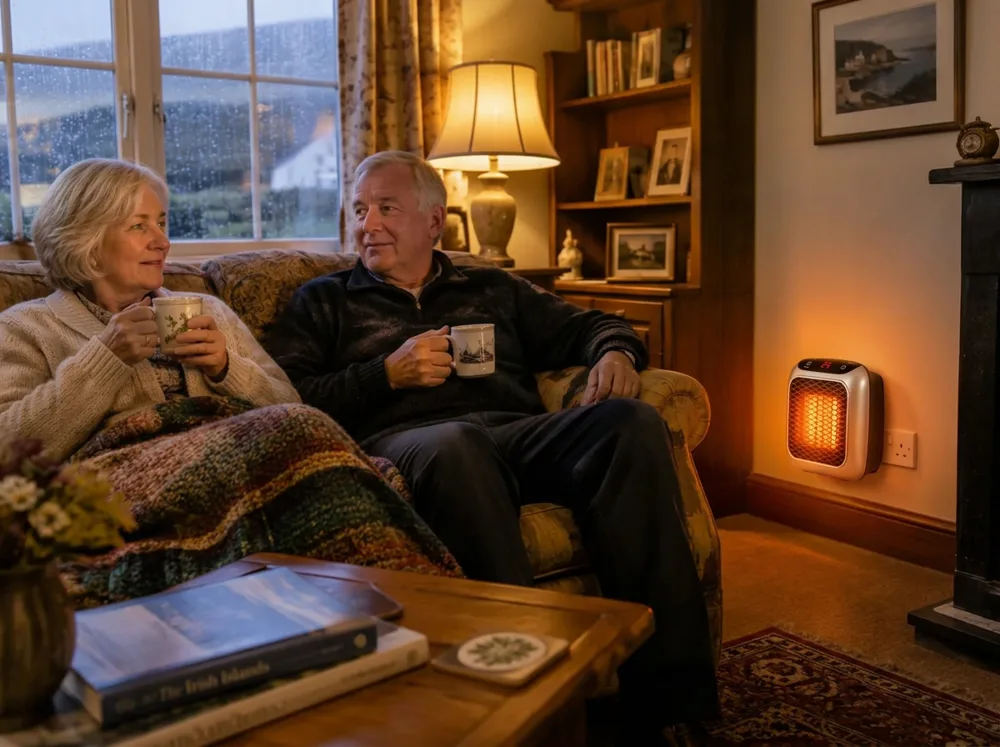
3. Enjoy the warmth
Feel the room warm within minutes while the thermostat keeps it steady.
What safety features does RapidHeat have?
RapidHeat includes overheat protection and automatic shut-off. These safeguards help manage abnormal overheating, but cannot make a covered heater or unsafe position acceptable. Never cover the appliance or allow fabric to fall across it.
It is not IP-rated. Do not use it in bathroom zones or wet areas, and keep it away from splashes. Keep children and pets away from the appliance and follow all supplied clearance and handling instructions.
Do not assume an automatic shut-off means every hazard is detected. If the heater, plug or socket appears damaged, smells unusual or overheats, stop using it and seek appropriate help rather than repeatedly restarting it.
- Overheat protection cuts power if the heater gets too hot.
- Automatic shut-off as a safety backup.
- Programmable timer to end a session when you plan.
- PTC ceramic plates that limit their own temperature.
- Not for bathrooms or wet areas – RapidHeat has no IP rating.
- No extension leads – always plug straight into the wall.
What are the main benefits and limitations?
The compact format, two power settings and thermostat suit local warmth without a freestanding heater taking up floor space. The remote and timer can make a short session more convenient, provided the socket is safely positioned.
The trade-offs are modest maximum output, audible airflow and no suitability for wet locations. Match its output and controls to the space you intend to heat.
- Best fit: a suitable small enclosed room used for an attended session.
- Less suitable: spaces needing more heat, people seeking silence or rooms with obstructed wall sockets.
- Not a replacement for: insulation, ventilation, safe central heating or an assessment of persistent damp.
How can you use the controls to avoid wasting energy?
Match heating to occupancy. Start with high if needed, then try low once comfortable; stop heating when you leave. Four continuous hours on low at €0.35/kWh costs €0.56, or €16.80 over 30 days. Real consumption depends on thermostat cycling and conditions.
Close an internal door where practical, preserve ventilation and keep curtains clear. Savings come from heating less space or reducing unnecessary runtime, not superior conversion of electricity to heat. Our RapidHeat energy-saving guide explains the calculations.
SEAI provides information about energy improvements and grants; Fuel Allowance may help eligible households. Compare your own tariff before changing schedules, and do not run an ordinary heater in an empty room just to use a cheaper rate.
One unit costs €59 including VAT, with two for €89, three for €119 and four for €179. Check RapidHeat prices and returns information before buying for additional rooms.
Step by step
- Read the instructions and inspect the heater. Read the supplied manual and check the heater and plug for visible damage before use. Do not use damaged equipment.
- Choose a safe, dry socket position. Find a suitable Type G wall socket with clear airflow, away from curtains, bedding and wet areas. Do not use a bathroom-zone socket location.
- Plug directly into the wall. Connect directly to the suitable wall socket. Never use an extension lead, and do not cover the appliance.
- Switch on and select a power level. Use the controls as described in the manual. Choose 400W low or 800W high according to the room’s heating needs.
- Set a comfortable thermostat target. Adjust the temperature with the appliance controls or remote and remain present while checking room comfort. Try low once warm if it maintains the temperature.
- Set the timer for your session. Use the programmable timer according to the supplied instructions. Keep airflow clear and remain awake and present during use.
- Switch off when finished. Switch off before leaving the room or going to sleep. Follow the manual for safe cooling and handling before moving or storing the appliance.
Who RapidHeat is not right for
We'd rather you buy the right heater than return the wrong one. RapidHeat probably isn't for you if:
- Anyone needing a single heater for a whole house, large open-plan room or poorly insulated conservatory.
- Anyone wanting bathroom-zone or wet-area heating: RapidHeat is not IP-rated.
- Anyone who needs complete silence, as RapidHeat uses a fan rated at about 45 dB.
- Anyone whose available socket would require an extension lead or place the heater beside curtains or bedding.
Frequently asked questions
How does RapidHeat heat a room?
Electricity warms PTC ceramic plates, and a fan circulates air across them into the room. The thermostat controls heating around your selected target, with 400W low and 800W high settings.
Does RapidHeat need installation?
It plugs directly into a suitable Irish/UK Type G wall socket rather than requiring a fixed heating installation. You still need a dry, clear position and must follow the supplied safety instructions.
Does RapidHeat turn off at the selected temperature?
The thermostat cycles heating off when its sensed target is reached and calls for heat as the room cools. This does not mean you should leave the appliance unattended.
Can I control RapidHeat from my chair?
It includes a remote control and an LED display on the appliance. Remote operation does not remove the need for a safely positioned, unobstructed wall socket.
Is RapidHeat completely silent?
No. It uses a fan rated at about 45 dB, so expect some airflow noise during operation rather than silent radiant heating.
How do I use the RapidHeat remote?
Point the remote at the heater and use its buttons to switch on or off and raise or lower the temperature, with the setting shown on the LED display. Follow the supplied manual for the exact button functions and timer steps.
Does RapidHeat turn itself off?
Yes, in three ways: the thermostat pauses heating once your set temperature is reached, the timer can end a session, and overheat protection with automatic shut-off acts as a safety backup. Still switch it off when you leave the room or go to sleep.
Can I put RapidHeat in my bathroom?
No: it is not IP-rated and must not be used in bathroom zones or wet areas. Choose heating specifically suitable for the location instead.